Choosing the Right Cooktop: Fuel Type, Size, and Burners Explained
The single biggest decision when choosing a cooktop is fuel type: gas if you want an open flame and instant visual heat control, electric radiant if you want a smooth surface and a simple 240V hookup, or induction if you want the fastest heat and the easiest cleanup. Once you know your fuel type, narrow by width (30-inch fits most kitchens, 36-inch suits serious cooks), then by burner count and wattage to match how you actually cook.


Gas vs. Electric vs. Induction: Which Fuel Type Is Right for You?
Gas cooktops burn natural gas or propane and give you an open flame you can see and adjust instantly without any lag. Electric radiant cooktops use resistance heating coils under a ceramic glass surface and run on a standard 240V circuit. Induction cooktops are also electric, but they heat the pan directly through magnetic induction rather than warming the glass surface first, which makes them faster and more energy-efficient than radiant electric. If your home already has a gas line under the counter, gas is often the easiest swap. If you are remodeling or starting fresh, induction is worth the premium for speed and cleanup alone. Electric radiant sits in the middle, costing less upfront while still giving you a flat, easy-to-wipe surface.
Width: 30-Inch vs. 36-Inch (and Smaller Options)
Most built-in cooktops come in 30-inch and 36-inch widths, and the cutout in your countertop determines which one fits without a cabinet rebuild. A 30-inch cooktop typically holds four to five burners and handles everything from a weeknight pasta to a Sunday roast without crowding. A 36-inch cooktop adds a sixth burner or more surface space between burners, which matters when you are running a large pot, a skillet, and a saucepan at the same time. Compact 12-inch and 24-inch models exist for small apartments or second cooking zones, like the Karinear KNC-D23002, a 12-inch two-burner radiant electric that fits tight countertops at under $160. Measure your existing cutout before ordering, and confirm the exact cutout dimensions in the product spec sheet, not just the overall appliance width.
Burner Count and BTU: Matching Power to Your Cooking Style
A 4-burner cooktop covers most home cooking scenarios, while a 5- or 6-burner layout gives you a dedicated low-simmer zone alongside high-output burners. On gas cooktops, output is measured in BTU per burner. Higher BTU burners boil water faster and sear meat more aggressively, while low-BTU simmer burners let you hold a chocolate sauce without scorching it. On electric and induction models, wattage is the equivalent measure. The Frigidaire FPGC3077RS, a 30-inch 5-burner gas drop-in with a 4.5-star rating from nearly 400 buyers, is a strong benchmark for a family kitchen. For induction, the AMZCHEF EC-30inch packs five burners and 10,600 watts total into a 30-inch built-in footprint, giving you restaurant-level speed in a home cooktop.
Installation Type: Drop-In, Built-In, Countertop, and Slide-In
Drop-in cooktops sit into a cutout from above and rest on the surrounding countertop surface, making them the most common type for kitchen remodels. Built-in models are similar but often flush-mount with a frame that sits below the counter edge for a cleaner look. Countertop models require no cutout at all and simply sit on the surface, making them ideal for renters or small spaces. Slide-in models are less common and designed to integrate into a specific cabinet run. Confirm the installation type matches your cabinet setup before buying, and budget for an electrician or gas plumber if you are changing fuel types or upgrading from a 120V outlet to a 240V dedicated circuit.
Induction Requires Compatible Cookware
Induction is efficient and fast, but it only works with magnetic cookware. Cast iron and most stainless steel pans are compatible; aluminum, copper, and most non-stick pans are not unless the manufacturer specifically labels them induction-ready. A quick test: if a refrigerator magnet sticks firmly to the bottom of a pan, it will work on an induction cooktop. If you are switching from gas or radiant electric to induction, check every pan in your cabinet before you order. The Frigidaire FGIC3066TB is a 30-inch, 4-burner induction cooktop rated 3,800 watts with 822 buyer reviews, making it one of the most-reviewed induction options in this category if you already own compatible cookware.
What to Check in Specs Before You Buy
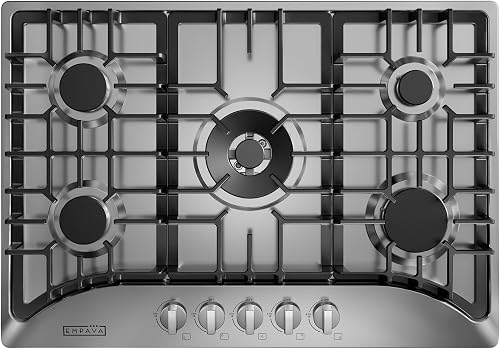
Beyond fuel type and width, a few spec details separate a good purchase from a frustrating one. Voltage matters: most built-in electric and induction cooktops require 240V, while smaller countertop models often run on 120V. The Empava 30 Inch Gas Cooktop (B07P3WBF5C) is a 5-burner, 30-inch built-in that accepts both natural gas and propane, which is useful if you might move or want flexibility. Weight indicates build quality on gas units: sealed burner gas cooktops typically weigh 25 to 50 pounds, while entry-level two-burner electrics can weigh under 10. Always confirm the cutout dimensions, the required circuit amperage, and whether a propane conversion kit is included or sold separately before finalizing your purchase.
Common mistakes to avoid
- Buying the wrong width without measuring the existing cutout first
- Ordering an induction cooktop before checking whether existing pans are magnetic
- Assuming a 120V outlet is enough for a full-size built-in electric or induction model
- Choosing burner count based on the stovetop footprint alone rather than how many pots you actually run simultaneously
- Ignoring the difference between overall appliance width and the required cutout width, which are not the same number
- Forgetting to budget for a licensed gas plumber or electrician when switching fuel types
Frequently asked questions
Is induction faster than gas?
Induction heats pans faster than gas because energy transfers directly to the cookware rather than radiating through a flame or a glass surface. A high-wattage induction burner can bring a pot of water to a boil noticeably faster than most residential gas burners. The tradeoff is that induction requires magnetic cookware, so you may need to replace pans. Gas still gives you more immediate visual feedback and works with any pot.
What size cooktop do I need for a standard kitchen?
A 30-inch cooktop fits the majority of standard kitchen layouts and provides four to five burners, which is enough for most household cooking. If your existing range is 30 inches wide, a 30-inch cooktop will typically drop into the same cabinet run after modest countertop modification. Choose a 36-inch model only if your countertop run is wide enough to accommodate the larger cutout and you regularly cook multiple large dishes at once.
Can I replace my range with a separate cooktop?
Yes, but it involves more than just swapping the appliance. You will need to cut a cooktop-sized opening in your countertop, cap or remove the old range opening, and verify that you have the correct gas line or electrical circuit for the cooktop you choose. Most homeowners pair a separate cooktop with a wall oven to reclaim counter space and position the oven at a more ergonomic height. Factor installation costs into your budget before committing.
How many burners does a home cook actually need?
Four burners handle the vast majority of everyday cooking. Five burners become useful when you need one dedicated low simmer spot for sauces while the other four run at higher heat. A sixth burner starts to matter if you frequently cook for large groups or run a big griddle pan alongside other pots. If you mostly cook for one or two people, a two-burner compact cooktop may be all you need.
What is the difference between sealed and open burners on a gas cooktop?
Sealed burners have a cap that sits over the gas port and prevents spills from dripping into the burner itself, making cleanup much easier. Open burners expose the gas port and surrounding bowl, which professional-style cooktops sometimes use because they can deliver higher BTU output, but spills require more effort to clean. For most home kitchens, sealed burners are the practical choice. The Empava 30 Inch Gas Cooktop uses sealed burners, which is why cleanup is straightforward even with a built-in installation.