A single wall oven gives you built-in cooking flexibility without the footprint of a full range, and the right pick depends on your fuel type, cabinet opening, and how much oven capacity you actually need. Most residential cutouts accept a 24-inch or 30-inch wide unit, so matching dimensions before you buy is just as important as choosing between electric convection and gas. We ranked the top models available today by blending star ratings, verified buyer reviews, price-to-spec value, and real demand signals so you can shop with confidence.
Short answer: The Garvee built-in electric convection wall oven earns the top spot with the highest rating in this category at 4.5 stars from verified buyers, solid 2.5 cu ft capacity, and a price under $310 that nothing else in the silo comes close to matching.
The Garvee built-in electric convection wall oven earns the top spot with a 4.5-star rating, the highest in this entire silo, backed by 15 verified buyer reviews at a price of $305.99. It fits a standard 24-inch opening at 25.94 inches wide, delivers 2.5 cu ft of convection-heated capacity, and comes in a polished black finish. For buyers who want a reliable, well-rated electric wall oven without spending anywhere near $600, this is the one to beat.
Best for: Budget-conscious buyers who want a top-rated electric convection wall oven in a 24-inch opening.
Pros
Highest buyer rating in the category at 4.5 stars
Most affordable electric convection pick at $305.99
2.5 cu ft capacity handles everyday family cooking
Built-in installation for a clean flush look
Solid buyer sample with 15 reviews
Cons
Polished black finish shows fingerprints
No wattage spec published, cannot confirm preheat speed
Review count still modest compared to legacy appliance brands
Bottom line: The best-rated single wall oven in this silo at the lowest price, a rare combination that makes it the easy top pick.
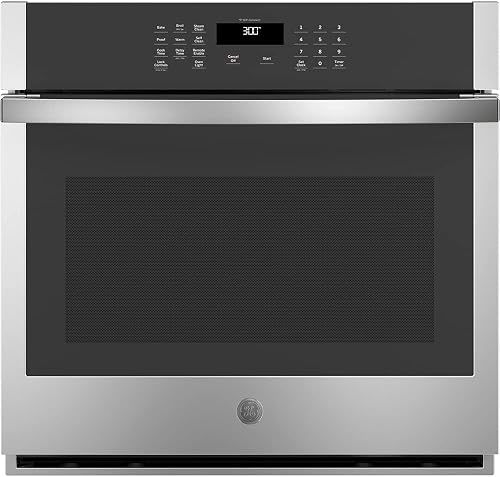
The GE JTS3000SNSS is the go-to choice for buyers who need real oven space, delivering 5.0 cu ft of electric convection capacity in a 30-inch wide unit at $1,088. It pulls 2,850W and is designed for installation above a warming drawer, making it a natural anchor for a full wall oven setup. With a 4.3-star rating from 13 verified buyers and a polished solid black finish, it earns its place as the capacity leader for families that cook at scale.
Best for: Families with a 30-inch cabinet opening who need the largest capacity single wall oven available in this category.
Pros
5.0 cu ft capacity, by far the largest in this roundup
4.3-star rating with 13 verified buyer reviews
Electric convection for even, consistent heat distribution
2,850W heating element for solid preheat performance
Designed for above-warming-drawer installation
Cons
30-inch width requires a matching cabinet cutout
$1,088 price puts it in the premium segment
Solid black finish may not match every kitchen
Bottom line: If oven space is your primary concern and you have the 30-inch cutout, the GE JTS3000SNSS is the clear answer.
The Midea MEW24S2AST punches above its $484.96 price tag with a 4.4-star rating, 2.5 cu ft convection capacity, and a 23.43-inch width that fits standard 24-inch openings. It uses simple dial controls, which many cooks actually prefer for their speed and reliability over touchpad interfaces. Weighing in at 70.6 lb, it is one of the lighter 24-inch units in this roundup, making it somewhat easier to handle during installation.
Best for: Buyers who want convection performance and a high rating in a 24-inch oven without paying over $500.
Pros
4.4-star rating among the highest in this silo
Dial controls are fast and intuitive for everyday use
2.5 cu ft convection capacity at under $485
Lightest of the 24-inch convection options at 70.6 lb
Standard 23.43-inch width fits common 24-inch cutouts
Cons
Fuel type not specified in available specs
No wattage data published
Only 11 buyer reviews, smaller sample than the top picks
Bottom line: Strong rating, dial controls, and a sub-$500 price make the Midea the best value convection pick in this category.
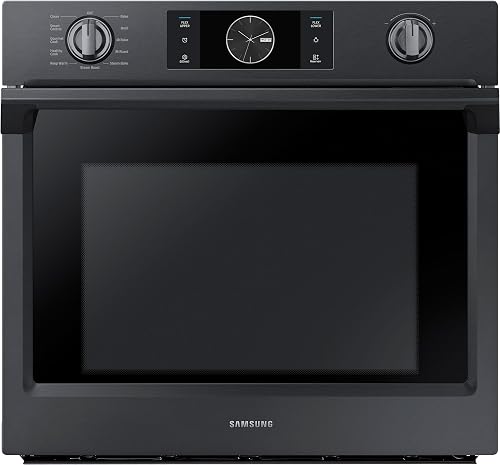
Samsung's 5.1 cu ft electric convection wall oven at $999 is the largest-capacity single wall oven in this entire silo, and at 28.5 inches wide it fits a wider range of opening sizes than the standard 30-inch GE. It carries a 4.0-star rating from 9 verified buyers and a stainless steel finish that works with virtually any kitchen. For buyers who want maximum capacity in an electric convection package from a household name brand, Samsung delivers.
Best for: Buyers who want the absolute most cubic feet in a large electric convection wall oven from a major brand.
Pros
5.1 cu ft, the largest cavity in this roundup
Wall mount installation with 28.5-inch width
Electric convection for even baking and roasting
Stainless steel finish suits most kitchen styles
Samsung brand recognition and support network
Cons
Only 9 verified buyer reviews, limited feedback sample
$999 price is a significant investment
No wattage spec available to assess preheat speed
Bottom line: The Samsung delivers the biggest cavity in this roundup for buyers who need serious electric convection capacity.
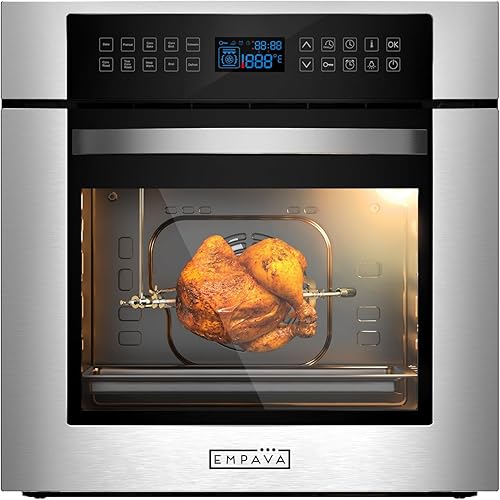
The Empava 24-inch electric convection wall oven holds the most buyer reviews of any electric model in this silo with 35 ratings averaging 4.0 stars, giving it the most reliable signal of real-world satisfaction. At $599.99 it delivers 2.3 cu ft of convection capacity at 3,200W via a 240-volt connection and weighs 80 lb. The stainless steel finish and 23.43-inch width make it a clean, standard fit for most 24-inch kitchen cutouts.
Best for: Buyers who want the most buyer-validated 24-inch electric convection wall oven and are willing to pay a mid-range price for that confidence.
Pros
35 verified buyer reviews, strongest sample among 24-inch electric models
4.0-star consensus rating across a meaningful review count
3,200W electric convection for efficient heating
240-volt standard installation
Stainless steel finish at 80 lb, solid build feel
Cons
2.3 cu ft capacity is on the smaller side for families
$599.99 is not the cheapest electric option in this category
No published rack count in available specs
Bottom line: With 35 reviews and a 4.0-star average, the Empava 24-inch convection has the largest real-world validation of any compact electric model here.
The Empava LP gas single wall oven is the most-reviewed gas or LP model in the silo with 40 ratings averaging 3.9 stars, making it the go-to choice for buyers who need propane-compatible cooking. It delivers 2.3 cu ft of convection capacity in a 23.42-inch wide built-in or wall-mount unit at $852.20, with a brushed silver finish and 80 lb weight. For rural kitchens and homes not on natural gas, this is the most proven LP wall oven option in this roundup.
Best for: Homeowners with liquid propane service who need a proven, convection wall oven in a 24-inch opening.
Pros
40 buyer reviews, the most of any gas/LP model in this silo
3.9-star average demonstrates consistent real-world satisfaction
LP gas convection covers buyers without natural gas service
Flexible built-in or wall-mount installation
Brushed silver finish with a compact 23.42-inch width
Cons
Requires LP gas supply and licensed gas installer
$852.20 is a premium over electric alternatives of similar capacity
2.3 cu ft cavity is modest for the price
Bottom line: The most-reviewed LP gas single wall oven in this category, a reliable propane option backed by real buyer feedback.
The Empava 24-inch LPG built-in wall oven steps up the heating sophistication with conduction, convection, and radiant modes in a single unit, rated 4.0 stars across 20 buyer reviews at $799.99. It outputs 3,980W, the highest wattage of any unit in this roundup, runs on 120-volt service for its controls, and fits a 23.42-inch wide cutout. The stainless steel finish and 80 lb build are consistent with the Empava lineup, and the multi-mode heating gives cooks more flexibility than a single-method oven.
Best for: LP gas buyers who want the most heating flexibility and the highest wattage output in a 24-inch wall oven.
Pros
Three heating modes: conduction, convection, and radiant
3,980W, highest wattage spec in this entire roundup
4.0 stars from 20 verified buyers
120-volt control wiring simplifies electrical requirements
Stainless steel finish at a standard 24-inch width
Cons
Requires LP gas supply and professional gas installation
$799.99 is higher than the standard LP gas Empava model
2.3 cu ft capacity is compact relative to the price
Bottom line: The most versatile LP gas wall oven in this roundup, with three heating modes and the highest wattage of any model listed.
The Empava built-in electric wall oven earns its spot with a 4.2-star rating from 8 buyers and a price of $556.53, making it the highest-rated electric option under $560 in this silo. It delivers 2.5 cu ft capacity with conduction and radiant heating at 2,950W, runs on 240 volts, and fits a 23.4-inch wide cutout. The brushed stainless finish at 80 lb is clean and neutral.
Best for: Buyers who want a highly-rated 24-inch electric wall oven with 2.5 cu ft capacity and don't need convection, at a price under $560.
Pros
4.2-star rating, strong for a sub-$560 electric oven
2.5 cu ft capacity, slightly larger than most 24-inch peers
Dual heating: conduction and radiant
240-volt standard installation
Brushed stainless finish
Cons
No convection fan, conduction and radiant only
Only 8 buyer reviews, modest sample size
2,950W is on the lower end for electric wall ovens
Bottom line: The best-rated electric wall oven under $560, offering a step up in capacity over most 2.3 cu ft competitors.
The Empava 24-inch natural gas single wall oven fills a genuine gap in this roundup, natural gas built-in wall ovens are rare and in high demand from buyers with gas lines and no desire for a full range. It earns 4.4 stars from 3 early reviewers, runs at 120 volts for ignition, and delivers 2.3 cu ft through conduction, convection, and radiant heating modes. At $738.19 and a 23.4-inch width, it is the natural gas answer for buyers in this silo.
Best for: Homeowners with a natural gas supply who want a built-in single wall oven with convection and multi-mode heating.
Pros
Natural gas fuel type, one of the very few in this category
4.4-star early rating
Three heating modes: conduction, convection, and radiant
120-volt ignition wiring is simpler than 240V
Brushed silver finish at 80 lb
Cons
Only 3 buyer reviews, very early signal
Requires licensed gas installer for natural gas line connection
2.3 cu ft is compact for the $738 price
Bottom line: The standout natural gas single wall oven in this silo, rare fuel type, multi-mode heating, and a strong early rating.
The Empava 24-inch electric wall oven pulls 3,400W, the highest wattage of any electric model in this roundup, and combines convection and radiant heating in a 2.3 cu ft built-in unit at $546.08. It carries a 3.8-star rating from 14 verified buyers and runs on 240 volts with a brushed finish and 82 lb weight. Buyers who prioritize fast preheat and versatile heating modes in a budget-friendly electric package will find a strong option here.
Best for: Buyers who want the fastest-preheating electric wall oven under $550 in a standard 24-inch opening.
Pros
3,400W, highest wattage of any electric model in this silo
Combined convection and radiant heating
14 buyer reviews at 3.8 stars
Under $550 price with a 24-inch fit
82 lb sturdy build
Cons
3.8-star rating is the minimum threshold for this list
2.3 cu ft capacity is compact
Color listed as '10 Modes-Sliver', cosmetic spec is unusual
Bottom line: The highest-wattage electric single wall oven in this roundup, a good pick when preheat speed and multi-mode heating matter most.
Electric single wall ovens dominate this category and for good reason: installation is straightforward, temperature consistency is excellent with convection, and 240-volt service is standard in most American homes. Gas and liquid propane (LP) wall ovens are a smaller but real segment, useful for households without 240V wiring or those who prefer gas cooking. LP gas models like the Empava propane units require a separate LP supply and regulator but work well in rural settings or homes already set up for propane. Natural gas built-in wall ovens are rarer and typically need a licensed plumber for the gas line connection. Whichever fuel type you choose, verify your rough-in opening and available utility service before ordering.
Convection vs. Radiant Heating
Convection wall ovens use a fan to circulate hot air around food, which shortens cook times, browns more evenly, and is especially useful for baking multiple racks of cookies or roasting vegetables. Radiant ovens rely on traditional top and bottom heating elements without a fan, which works fine for everyday cooking but can create hot spots in larger cavity sizes. Several models in this silo combine both heating methods, giving you the option to use convection when precision matters or switch to radiant for recipes that call for conventional heat. If baking is a priority, paying a small premium for convection is almost always worth it. Look for models that list convection explicitly in the heating method rather than just implying it.
Capacity: How Many Cubic Feet Do You Need?
Single wall ovens in this category range from about 2.1 cu ft up to 5.1 cu ft, which is a meaningful difference at Thanksgiving. Most 24-inch wide models top out around 2.3 to 2.6 cu ft, enough for a standard roasting pan or a 9x13 casserole dish but tight for a full turkey. If you need 5 cu ft or more, you are looking at 30-inch wide units like the GE JTS3000SNSS or the Samsung, and your cabinet cutout must match. For small kitchens or apartments with a 24-inch opening, the compact 2.3 to 2.5 cu ft range is the practical ceiling, so focus on heating method and wattage rather than chasing capacity you cannot fit.
Wattage and What It Means for Performance
Wattage tells you how quickly an electric wall oven can reach target temperature and recover between uses. The electric models in this silo range from about 2,850W to 3,400W, with the Empava 24-inch convection-radiant model at 3,400W sitting at the top of that range. Higher wattage generally means faster preheating, which matters if you cook dinner on a tight weeknight schedule. That said, wattage differences of 200 to 300W rarely translate into a noticeable real-world gap unless you are doing back-to-back batches. Make sure your circuit can handle the draw, most 240-volt installations use a 20-amp or 30-amp dedicated circuit, and your electrician can confirm what your panel supports.
Installation: Built-In vs. Freestanding Single Wall Ovens
The majority of single wall ovens in this roundup are built-in units designed to slide into a dedicated cabinet cutout and be secured with mounting screws through the trim frame. A small number, including Summit Appliance models, are listed as freestanding, meaning they can be positioned more flexibly but may not have the same flush-mount finished look. Built-in installation almost always requires a licensed installer or experienced DIYer because you need to match the cutout dimensions precisely, make the 240V hardwired connection, and ensure the unit is level and secured before use. Always cross-reference the product dimensions against your cabinet opening, even a half-inch mismatch can prevent a clean install.
Matching Width to Your Cabinet Opening
Single wall ovens come in two standard widths in this category: 24-inch (roughly 23.4 to 23.5 inches actual) and 30-inch (roughly 29.75 to 30 inches). Most buyers in the 24-inch market are replacing an existing unit in a kitchen that was originally built with a 24-inch cutout, which is common in older homes, apartments, and European-style kitchens. The 30-inch footprint is the American standard for new construction and pairs with larger cooktops, giving you the 5-plus cu ft capacity most families want. Measure your existing cutout height, width, and depth before ordering, and add a small buffer per the manufacturer's installation guide, wall ovens need clearance on all sides for heat dissipation.
Common mistakes to avoid
Ordering a 30-inch oven for a 24-inch cabinet opening, always measure the cutout, not the old oven's exterior
Assuming all single wall ovens include convection, radiant-only models are common at lower price points and cook differently
Forgetting to confirm the electrical circuit: 240V at 20 or 30 amps is required for most electric wall ovens, not a standard 120V outlet
Buying an LP gas wall oven without confirming LP supply availability and local code requirements for installation
Ignoring the heating method spec and focusing only on price, then being surprised that a cheaper radiant oven runs hotter at the back than the front
Not reading the rough-in depth requirement, some built-in wall ovens need more cabinet depth than a standard 24-inch-deep cabinet provides
Frequently asked questions
What is the difference between a single wall oven and a double wall oven?
A single wall oven has one oven cavity built into the wall, while a double wall oven stacks two separate cavities in the same opening. Single wall ovens take up less vertical cabinet space and cost less, making them a better fit for smaller kitchens or households that rarely need to cook two dishes at different temperatures simultaneously. Double wall ovens cost more and require a taller cutout but give you a lot more flexibility for large gatherings. If you cook big holiday meals regularly and have the cabinet space, a double unit is worth considering, but for most weeknight cooking a single cavity is sufficient.
Can I replace a gas range with a single wall oven?
Not directly, a single wall oven is a dedicated built-in appliance that requires a cabinet cutout, so you cannot simply drop it in where a freestanding range stood without significant cabinet and utility work. You would need to build or modify cabinetry to create the correct opening, then install a separate cooktop in a different location. If your goal is a separate cooktop-plus-oven layout, hiring a kitchen contractor to build out the necessary cabinetry first is the right move. The upside is that you gain flexible placement for both the cooktop and the oven, which can dramatically improve kitchen workflow.
Do single wall ovens need to be hardwired?
Most electric single wall ovens in this category require a hardwired 240-volt connection, not a standard plug-in outlet. This typically means having a licensed electrician run a dedicated circuit and make the connection inside a junction box behind the unit. A few LP gas models in this roundup operate on 120V for the igniter and controls, which makes them easier to wire but still require a licensed gas installer for the fuel line. Always read the installation requirements before purchasing to confirm what electrical and utility work your home will need.
Is convection worth paying extra for in a wall oven?
For most buyers, yes. Convection circulates hot air with a fan so food browns more evenly, roasts cook faster, and multiple sheet pans of cookies come out more consistently than in a conventional radiant oven. The price difference between convection and radiant models in this silo is often modest, sometimes $50 to $100, and the performance benefit is real and repeatable. If you primarily bake or roast, the upgrade pays for itself quickly in better results. Reheating leftovers and simple weekday cooking work fine in either type, so it ultimately depends on how seriously you cook.
What capacity single wall oven do I need for a family of four?
A 2.3 to 2.5 cu ft oven is workable for a family of four on most nights, it holds a 9x13 baking dish, a standard roasting pan, or two sheet pans side by side. Where it gets tight is holiday cooking: a full turkey or multiple casseroles at once will stress the limits of a compact 24-inch oven. If your kitchen has a 30-inch opening, the GE JTS3000SNSS at 5.0 cu ft or the Samsung at 5.1 cu ft give you the room that a growing family actually needs. Families who entertain frequently and have the cabinet space should strongly favor 30-inch units.
Are LP gas wall ovens hard to find?
They are less common than electric models but available. Empava offers both LP (liquid propane) and natural gas single wall oven options in the 24-inch size, and they are in stock on Amazon. LP gas models work well for rural homes, lake cabins, or any location where propane is the primary cooking fuel. Installation requires a licensed gas technician to connect and test the LP supply line, and you will need to confirm that the unit ships configured for LP rather than natural gas, some models require a conversion kit.
How do I know if my cabinet opening matches a new single wall oven?
Measure the height, width, and depth of the existing cutout with a tape measure, and compare those numbers against the manufacturer's minimum and maximum cutout dimensions, not the oven's exterior dimensions. Most 24-inch built-in wall ovens specify a cutout width of roughly 22.5 to 23 inches and a cutout height around 22 to 23 inches, but these vary by model. The installation guide (usually available as a PDF from the manufacturer) lists exact tolerances. If you are replacing an existing oven, the new unit's cutout requirements must fall within the same range, or you will need cabinetry modifications.
Final recommendation
Single wall ovens have come a long way in the 24-inch segment especially, with solid electric convection options now available under $600 and even a few LP gas choices for buyers outside the natural gas grid. The Garvee stands out for pure value, while the GE JTS3000SNSS is the clear answer for buyers who need real capacity and have a 30-inch opening. Match your fuel type, measure your cutout carefully, and prioritize convection if baking matters to you, those three decisions will get you to the right oven faster than any other spec. Every pick on this list is in stock and ranked on real buyer ratings, not speculation.
We use necessary cookies to keep the site working. With your permission, we also use functional, analytics, and marketing cookies. Read our Cookie Policy.