Convection vs. Conventional Wall Oven: What Actually Changes in Your Cooking
A convection wall oven uses a fan to circulate hot air around the food, which cooks faster and more evenly than a conventional oven that relies on still heat radiating from top and bottom elements. For most home cooks who roast vegetables, bake multiple trays of cookies, or cook proteins, convection is the more practical choice. Conventional ovens are simpler, usually less expensive, and work well when you cook one dish at a time following standard recipe times.

How Each Heating Method Actually Works
A conventional wall oven heats the cavity from stationary elements at the top and bottom. Hot air rises and cooler air sinks, creating pockets of uneven temperature across the oven. A convection wall oven adds a fan, sometimes a dedicated third heating element around it, that keeps the air moving continuously. That moving air strips away the cool boundary layer around food, transferring heat more efficiently to the surface. The result is faster browning and more consistent temperatures from rack to rack. Both types reach the same set temperature; the difference is how they deliver that heat to your food.
Cook Time and Temperature Adjustments
With convection, you typically reduce the temperature by 25 degrees Fahrenheit or cut the cook time by about 20-25%, or do a combination of both. Most convection wall ovens sold today handle this automatically with a dedicated convection mode that adjusts for you. With a conventional oven you follow recipe times as written, since nearly every published recipe was developed for still-heat cooking. If you switch to convection mid-recipe or forget to adjust, food browns faster than expected, especially delicate items like custards or quick breads. Getting a feel for your specific oven's convection strength is worth a couple of test runs.
What Convection Does Better
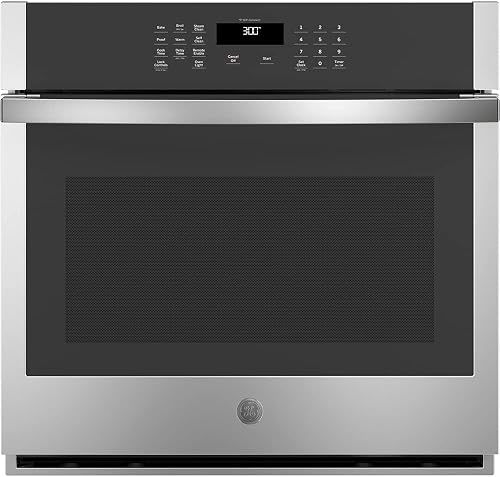
Convection excels at anything where a browned exterior matters: roasted vegetables, chicken thighs, pork tenderloin, sheet-pan meals, and anything on multiple racks at once. The circulating air means the bottom rack and top rack finish at roughly the same time, so you do not need to rotate pans halfway through. Baked goods that benefit from a set crust, croissants, pizza, artisan bread, also do well. The GE JTS3000SNSS, a 5.0 cubic foot electric convection wall oven rated 4.3 stars, gives enough capacity to run two full sheet pans simultaneously, which is where convection's multi-rack advantage becomes obvious.
When Conventional Heat Is the Right Call
Conventional heat is preferred for recipes that need gentle, moist heat throughout the cooking time: custards, cheesecakes, souffles, and bread puddings. The still air lets these dishes set slowly without the fan drying out the surface prematurely. Casseroles with a loose liquid base and most stovetop-to-oven braises also do fine in conventional mode. If your household mostly reheats food or cooks a single dish at a time on the center rack, you may never feel the difference from a convection fan. Many convection wall ovens let you turn the fan off, so buying one does not mean you lose access to conventional-style cooking.
Price and What You Get at Each Level
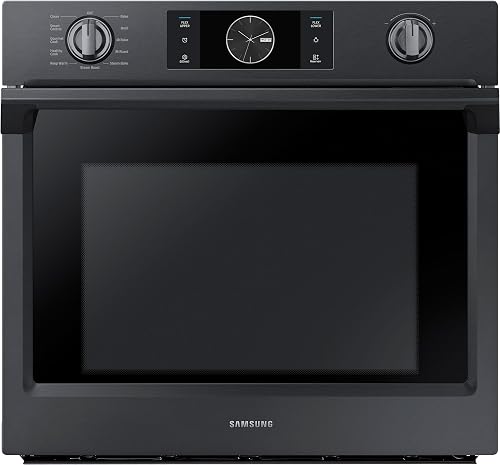
Convection wall ovens span a wide price range. The Empava 24-inch Electric Convection Wall Oven (ASIN B0785ZKJSG) runs about $600, delivers 2.3 cubic feet of capacity with 3200 watts of heating power, and fits a standard 24-inch cutout, a solid entry point for kitchens with limited space. Mid-range options like the Samsung Electric Convection Wall Oven (ASIN B01MQPMI5J) step up to 5.1 cubic feet for around $999, giving meaningfully more room for large roasts or holiday cooking. Conventional wall ovens without a fan tend to start lower, but the gap between entry-level convection and entry-level conventional has narrowed to the point where convection is hard to justify skipping.
Deciding Based on Your Kitchen and Cooking Habits
Start with your cutout size: most single wall ovens in this category install in 24- or 30-inch widths, and that constraint matters more than the heat mode when replacing an existing unit. If you have a 30-inch opening and want larger capacity, the GE JTS3000SNSS fits at 30 inches wide and 5.0 cubic feet. If you cook diverse dishes, sometimes roasts, sometimes custards, look for a convection model that lets you disable the fan, giving you both modes in one appliance. Budget-focused buyers who bake simple casseroles and do not cook in large volumes can use a conventional-style oven without any meaningful limitation.
Common mistakes to avoid
- Using full convection temperature and time without adjusting, food overcooks or burns on the outside before the inside is done.
- Baking cheesecakes or custards on convection mode, the moving air sets the surface too fast and causes cracking.
- Assuming all convection settings are equal, some ovens only circulate existing heat while others add a dedicated third element, which performs very differently.
- Buying a conventional oven to save money without checking that convection models in the same size aren't similarly priced.
- Ignoring cutout dimensions before purchasing, a 30-inch oven will not fit a 24-inch opening regardless of heat mode.
- Forgetting to preheat fully before loading the oven, convection fans do not compensate for a cavity that hasn't reached temperature yet.
Frequently asked questions
Can I use convection mode for everything I cook?
You can use convection for most savory cooking and many baked goods, but delicate items like custards, cheesecakes, and souffles generally do better in still, conventional heat. Most convection wall ovens let you turn the fan off when you need it, so you have both options. If your model only offers convection, reduce the temperature by 25 degrees and watch carefully during your first cook of any sensitive recipe.
Do I need to buy special pans for a convection wall oven?
No special pans are required, but low-sided pans allow air to reach more of the food surface. Rimmed sheet pans, roasting pans with low walls, and open wire racks all work well. Deep-sided pans or covered dishes block airflow and essentially replicate conventional heat inside, so you lose the benefit of the fan for those items.
Is convection or conventional better for baking bread?
It depends on the bread style. Artisan loaves with a hard crust benefit from convection heat early in the bake, which promotes oven spring and browning. Soft sandwich loaves and enriched breads like brioche are often better in conventional mode, since the fan can tighten the crumb before it has fully risen. If your oven has a dedicated bread-proofing or bake setting, that will typically configure itself correctly.
What is the difference between European convection and standard convection?
Standard convection uses the existing top and bottom elements with a fan added. European convection, sometimes called true convection or third-element convection, wraps an additional heating element directly around the fan so the air itself is heated before it circulates. European convection produces more even results and stronger airflow. When comparing wall ovens, look at the spec sheet to see whether a dedicated convection element is listed.
Does a convection wall oven use more electricity than a conventional one?
Not necessarily, because convection cooks faster at lower temperatures, the oven runs for less time per dish. The total energy used per meal is often similar or slightly lower than a conventional oven running longer at higher heat. The fan motor adds a small draw, but it is minor compared to the main heating elements. For most households the difference in utility cost between the two types is negligible.