What Actually Matters When Buying a Compact Microwave
Choosing a compact microwave comes down to three things: how much interior space you need (capacity in cubic feet), how powerful it should be (wattage), and whether a basic countertop model covers you or you need convection heating. Most home cooks buying for a small kitchen or dorm do best with a 0.7 to 0.9 cu ft model in the 700-1000W range. Spend a little more only if you genuinely want convection baking or a larger turntable for family-sized plates.

Start With Capacity: How Much Interior Space Do You Need?
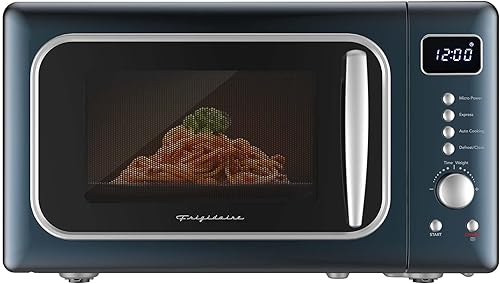
Compact microwaves typically run from about 0.7 to 1.6 cubic feet of interior capacity. A 0.7 cu ft unit like the Frigidaire EMW788BLUARGENT handles mugs, soup bowls, and single-serving plates without issue. If you regularly reheat full dinner plates or larger casserole dishes, step up to 0.9 cu ft or more. The Magic Chef MCM1611W offers 1.6 cu ft in a countertop footprint, which is unusually generous for a compact, useful if you cook for two but still need something smaller than a full-size microwave. Keep in mind that a bigger cavity also means a bigger footprint on your counter, so measure your available width before buying.
Wattage: The Number That Determines Cooking Speed
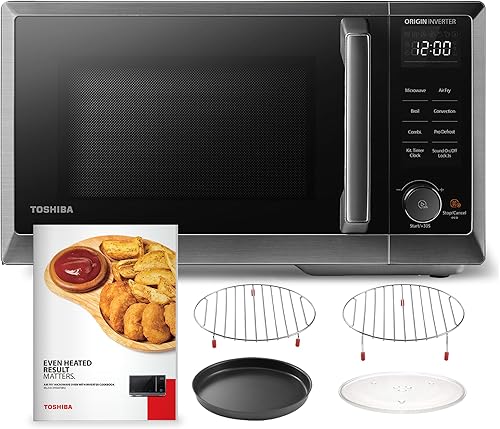
Wattage is the most practical spec to understand. A 700W microwave will reheat your coffee and warm leftovers, but it takes noticeably longer than a 1000W or 1800W model on denser food. The Frigidaire EMW788BLUARGENT runs at 700W and works well for light, everyday reheating. The Emerson MWRG0901W steps up to 1000W with a 0.9 cu ft cavity, making it a reasonable middle-ground choice. The Toshiba ML2-EC09SAIT(BS) pushes to 1800W, so it heats food significantly faster, worth the higher price if you use your microwave heavily. More power levels also give you finer control: 10 or 11 power levels (as on the Toshiba) beats a 5-level dial when you are defrosting delicate proteins.
Convection vs. Standard: Do You Actually Need It?
Standard microwaves heat food with microwave energy only. Convection microwaves add a heating element and a fan, letting them brown and crisp food the way a small oven would. The Toshiba ML2-EC09SAIT(BS) and Magic Chef MCM1611W both use convection heating, which means you can bake a batch of muffins or roast vegetables in the same unit you use to reheat soup. If you have limited counter space and no oven, convection is a genuine upgrade. If you already have a wall oven or range and just want something to reheat and defrost, a standard model saves you money and counter depth.
Countertop Fit: Measure Before You Buy
Compact does not mean tiny in an absolute sense. The Magic Chef MCM1611W is 21.8 inches wide; the Toshiba ML2-EC09SAIT(BS) is 19.5 inches wide; the HADEN 75152 fits into just 17.5 inches. Width matters most because microwaves need a few inches of clearance on each side for ventilation. Also note the turntable diameter: the Magic Chef has a 13.58-inch turntable that fits a standard dinner plate, while a smaller 9.6-inch turntable (Toshiba MM-EM07PA) limits you to smaller dishes. Confirm both the external width of the unit and the turntable size against your most-used plates.
Price vs. Features: Where to Draw the Line
Budget compact microwaves around $80, $120 cover basic reheating and defrosting reliably. The Frigidaire EMW788BLUARGENT at $79.99 and the Emerson MWRG0901W at $119.99 both earn strong ratings from hundreds of verified buyers in that range. Mid-range models around $175, $260, such as the Magic Chef MCM1611W or Toshiba ML2-EC09SAIT(BS), add convection, more power levels, and larger capacity. Paying above $260 for a compact microwave rarely adds everyday value for a home cook, unless you have a specific professional or commercial need. Stick to models with at least a few hundred reviews so buyer demand confirms real-world reliability.
Common mistakes to avoid
- Buying by brand name alone without checking wattage, two microwaves from the same brand can differ by 1000W or more.
- Ignoring exterior dimensions and then finding the unit does not fit the counter space or cabinet opening.
- Choosing a 0.7 cu ft model when your everyday plates are too wide for its turntable.
- Paying for convection heating when you already have an oven and only need basic reheating.
- Skipping power level count, a microwave with only 5 power levels gives you coarser defrost control than one with 10 or 11.
- Assuming all compact microwaves run on standard 120V, some commercial or over-the-range models require 240V wiring.
Frequently asked questions
What wattage should I look for in a compact microwave?
For basic reheating and beverage warming, 700W is sufficient. If you reheat dense leftovers frequently or want faster cook times, aim for 1000W or higher. Convection compact microwaves like the Toshiba ML2-EC09SAIT(BS) reach 1800W, which heats food noticeably faster and gives you enough power to bake or crisp food the way an oven would.
How much interior capacity do I actually need?
Most solo cooks and couples do fine with 0.7 to 0.9 cubic feet, enough for a standard dinner plate and most microwave-safe containers. If you regularly heat large dishes or cook for a family, 1.1 to 1.6 cu ft gives you more room without jumping to a full-size unit. Always check the turntable diameter alongside capacity, since a deep cavity with a small turntable still limits what you can fit.
Is a convection compact microwave worth the extra cost?
It depends on whether you lack oven space or want one appliance to do double duty. Convection heating lets you brown, crisp, and bake, things a standard microwave cannot do. If your kitchen already has a working oven and you just want to reheat food quickly, a standard compact microwave at a lower price point covers all your daily needs.
Can I put a compact microwave in a cabinet or enclosed space?
Only if the unit is rated for built-in or enclosed installation. Most compact countertop microwaves require open-air clearance on the sides and back to vent heat safely. Placing a standard countertop model in an enclosed cabinet can cause overheating and shorten the appliance’s life. Check the manufacturer installation specs before setting a microwave inside any confined space.
How do I know if a compact microwave will fit my plates?
Check the turntable diameter in the specs. A 9.6-inch turntable fits smaller bowls and mugs but may not clear a standard 10- to 11-inch dinner plate. A 13-inch or larger turntable handles most everyday dishes comfortably. If the facts sheet does not list a turntable size, measure the door opening width and subtract about two inches to estimate usable interior width.