The No-Nonsense Guide to Picking an Over-the-Range Microwave
Choosing an over-the-range microwave comes down to four things: the width of your cabinet opening (almost always 30 inches, sometimes 24), interior capacity in cubic feet, microwave wattage for cooking speed, and how the ventilation is set up to handle smoke and steam from your cooktop. Get those four right and you will have a unit that fits, performs, and actually clears the air above your range.
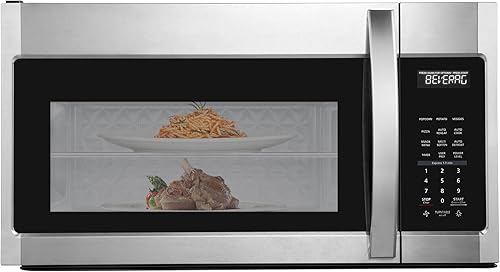


Width and Fit: Measure Before You Shop
The vast majority of over-the-range microwaves are designed for a 30-inch cabinet opening, and a standard 30-inch unit will not slide into a 24-inch space no matter how much you want it to. Before you browse a single model, measure the width of your existing cabinet cutout. If you have a smaller kitchen or a 24-inch range, look specifically for compact OTR units like the Haier HMV1472BHS (24 inches wide, 1.4 cu ft) or the COSMO COS-2413ORM1SS (23.8 inches wide). Height clearance matters too: most manufacturers call for at least 13 to 16 inches between the bottom of the unit and the cooktop surface, so check your range height and the unit's mounting depth before ordering.
Interior Capacity: How Much Cooking Space Do You Need
Over-the-range microwaves range from about 1.1 to 2.0 cubic feet of interior space. For most households, 1.6 to 1.9 cubic feet hits the sweet spot: roomy enough for a standard dinner plate or a 9x13-inch casserole dish without wasted overhead footprint. The GE JVM3160RFSS offers 1.6 cu ft at a budget-friendly price, while the BLACK+DECKER EM044KB19 steps up to 1.9 cu ft with a 13.5-inch turntable that handles larger dishes comfortably. If you routinely heat full-size pizza boxes or large mixing bowls, push toward 1.8 to 2.0 cu ft. Compact kitchens or secondary households can get by with 1.3 to 1.5 cu ft.
Wattage: The Real Driver of Cooking Speed
Wattage determines how fast and how evenly a microwave heats food. The sweet spot for a kitchen workhorse is 1000 watts, which is what you find in widely used models like the GE JVM3160RFSS (1000 W) and the Frigidaire FFMV1846VS (1000 W). Drop below 900 watts and you will notice longer reheat times, especially on dense foods like potatoes or casseroles. Some premium units push to 1500 watts for faster performance. Pair high wattage with a solid power-level system: 10 or 11 power levels give you precise control for defrosting or simmering, which a single-level setting simply cannot match.
Ventilation: Ducted, Ductless, or Convertible
The ventilation system is the one feature that separates an OTR microwave from a countertop unit. Ducted (exterior) ventilation pulls smoke, grease, and steam out of the kitchen through a duct in the wall or ceiling and is the most effective setup, especially if you cook on gas. Ductless (recirculating) ventilation filters the air through a charcoal filter and blows it back into the kitchen, which works fine for light cooking but will not keep up with serious stovetop sessions. Many OTR units are convertible, meaning they ship set up for recirculating and can be switched to ducted if you add or already have a duct. Check whether a duct kit is included or sold separately before you buy, and confirm your existing duct direction matches the unit's vent configuration.
Convection Heating: Worth the Upgrade for Some Cooks
Standard OTR microwaves heat with electric magnetron power. Convection models add a heating element and a fan, letting the unit also bake and roast like a small oven. This is genuinely useful if your kitchen has limited oven space or if you want a second oven for smaller batches. The BLACK+DECKER EM044KB19 (1.9 cu ft, convection) is one of the most-purchased models on the market with over 44,000 units sold in a single month, which speaks to how much cooks value that extra versatility at a mid-range price. If you rarely bake and mainly reheat food or make popcorn, standard electric heating is all you need and will save you $100 or more.
Controls, Finish, and Practical Details
Touchscreen controls are now common across most price points and make it easy to program cook times and power levels without memorizing button sequences. Physical button pads, like on the Frigidaire FFMV1846VS, are more durable over years of greasy-finger kitchen use and easier to clean between the keys. Stainless steel is the dominant finish and blends well with most modern kitchen suites, though white and black options exist for kitchens where stainless does not fit. One overlooked detail: the turntable diameter. A 13-inch or larger turntable means fewer awkward repositioning mid-cycle, while a small or absent turntable limits what dish sizes you can use.
Common mistakes to avoid
- Ordering a 30-inch unit without measuring the cabinet opening first, then discovering you have a 24-inch space.
- Ignoring wattage and buying a low-watt unit, then being frustrated by slow reheating every day.
- Assuming the microwave will vent effectively when it arrives set to recirculating mode in a home with no charcoal filter installed.
- Choosing capacity based on exterior size rather than interior cubic footage, ending up with a large unit and a cramped cooking cavity.
- Skipping the power-level count and buying a model with one or two settings, which makes defrosting meat hit or miss.
- Forgetting to verify the mounting hardware and upper cabinet depth, then finding the unit cannot be secured properly during installation.
Frequently asked questions
What is the standard size for an over-the-range microwave?
Most OTR microwaves are designed for a 30-inch wide cabinet opening, which aligns with standard 30-inch ranges. Height and depth dimensions vary by model, so always check the product specs against your actual cabinet measurements. A small but meaningful number of models are built for 24-inch openings to fit compact ranges and tighter kitchen layouts.
Is 1000 watts enough for an over-the-range microwave?
Yes, 1000 watts is the standard output for most mid-range OTR microwaves and is sufficient for everyday reheating, defrosting, and cooking tasks. Models like the GE JVM3160RFSS and the Frigidaire FFMV1846VS both run at 1000 W and handle normal household cooking without issue. If speed is a priority, look at 1500-watt models, but the real-world time difference on typical tasks is modest.
Can I install an over-the-range microwave without a duct?
Yes. Most OTR microwaves ship in recirculating mode, which means they filter the air through a grease filter and return it to the kitchen without any duct connection. This is the easiest installation but provides less ventilation power than a ducted setup. If you cook frequently on a gas range or do heavy frying, a ducted connection is worth the extra installation work for noticeably better smoke and odor removal.
What is the difference between a convection OTR microwave and a standard one?
A standard OTR microwave uses only microwave energy to heat food, which reheats and defrosts well but cannot brown or crisp surfaces. A convection model adds a heating element and a circulating fan, enabling it to bake, roast, and brown much like a conventional oven. The BLACK+DECKER EM044KB19 is a popular example with convection capability at a mid-range price. If you only use your microwave for reheating, a standard model saves money without any practical downside.
How many cubic feet do I need in an over-the-range microwave?
For most households, 1.6 to 1.9 cubic feet covers everyday use including full dinner plates, casserole dishes, and large mugs. Single-person households or smaller kitchens can work fine with 1.3 to 1.5 cu ft. The capacity you actually need depends on the largest dish you regularly heat, so think about your real cooking habits rather than picking the biggest number available.