Convection vs Conventional Oven Cooking Times: What You Need to Know
Switching between convection and conventional mode changes how fast your food cooks, and knowing the difference keeps dinner from coming out over- or under-done.
If you have ever slid a pan of roasted vegetables into a convection oven and pulled them out five minutes earlier than expected, you already know these two modes do not behave the same way. Convection ovens circulate hot air with a fan, which strips away the cool air layer that forms around food in a still conventional oven. The result is faster, more even cooking throughout the cavity. Understanding the practical differences will help you adapt any recipe with confidence instead of guessing every time.


How Convection Heat Actually Works
A conventional oven heats from elements at the top and bottom, and the air inside stays mostly still. Food cooks through radiation and slow conduction, which means the outside can get quite hot before the inside catches up. A convection oven adds a fan that keeps air moving continuously around the food, carrying heat to the surface faster and more consistently, which is why browning and crisping happen more reliably. Some ovens also add a third heating element near the fan itself, a feature sometimes called true or European convection, which supplies preheated air rather than just recycling what is already in the cavity for even more uniform results.
The Standard Convection Adjustment Rules
Most baking guides offer two simple adjustments for converting a conventional recipe to convection: lower the temperature by 25 degrees Fahrenheit, or reduce the cooking time by about 25 percent. The temperature reduction is generally the safer starting point because it gives you more control over browning while still benefiting from the faster heat transfer. A 350-degree conventional recipe becomes 325 degrees in convection mode, and you check for doneness a few minutes early. For something like a whole chicken that might cook in 90 minutes conventionally, plan on checking around the 65- to 70-minute mark in convection. Do not apply both adjustments at once or the food will likely be underdone.
Foods That Benefit Most from Convection
Roasted meats and vegetables are where convection truly shines. The circulating air promotes browning and crisping on the outside while cooking the interior evenly, so you get golden-skinned chicken, caramelized Brussels sprouts, and crispy potatoes without having to rotate pans halfway through. Cookies and sheet-pan pastries also turn out more consistent across the whole tray since the fan eliminates the hot and cool spots that plague conventional ovens. Multiple rack cooking is far more practical in convection because the moving air equalizes temperature throughout the cavity, letting you bake two sheet pans at once without swapping their positions mid-cook.
When to Stick with Conventional Mode
Delicate baked goods that rely on steam and a gentle rise are often better off in conventional mode. Souffles, custards, angel food cakes, and quick breads can be disrupted by the fan, which may cause uneven rising or a crust that sets before the interior has fully expanded. Cream pies and cheesecakes are similar: the fan dries out the surface faster than you want. A good rule of thumb is that anything with a batter that needs time to set before browning tends to do better without the fan running. If your oven has a convection bake mode alongside a convection roast mode, the bake setting usually runs the fan at a lower speed and is a useful middle ground for some of these items.
Cooking Times at a Glance
As a practical reference, here is how common tasks shift when you move from conventional to convection at the same recipe temperature: a whole chicken (4 to 5 pounds) goes from about 90 minutes down to roughly 70 to 75 minutes; a 9-by-13 casserole might drop from 45 minutes to about 35; a sheet pan of vegetables roasting at 400 degrees can go from 25 minutes to 18 or 20. Cookies that take 12 minutes conventionally may be done in 9 or 10 minutes. These are starting points, not guarantees, since every oven varies and the size and starting temperature of the food both matter. Always use a thermometer for meats rather than relying on time alone.
Double Wall Ovens and Convection Flexibility
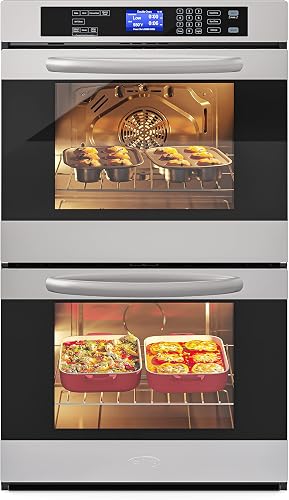
One reason cooks choose a double wall oven is the ability to run two cavities at different settings simultaneously. You might roast a pork loin in convection mode in the upper oven while keeping a custard warm in conventional mode in the lower cavity without either affecting the other. The Samsung NV51K6650DG/AA is a built-in convection double wall oven with a 5.1 cubic foot capacity per cavity in a stainless steel finish. The COSMO COS-30EDWC pairs two convection cavities totaling 5.0 cubic feet in a 30-inch built-in format. The KoolMore KM-WO30D-SS offers a larger combined 10.0 cubic foot capacity with convection in both cavities and 8,500 watts of total power, giving you serious flexibility for big meals.
Troubleshooting Common Convection Cooking Problems
If food is browning too fast on top but underdone inside, try dropping the temperature a bit more aggressively, perhaps 30 degrees instead of 25. If things seem to be taking just as long as in conventional mode, check that the fan is actually running during the cycle, since some ovens require you to select a dedicated convection mode rather than just pressing the bake button. Uneven browning across a pan usually means airflow is blocked, so avoid covering pans with foil and make sure they are not pushed flush against the back wall. Using low-sided pans whenever possible helps because high sides can shield food from the circulating air and essentially turn a convection oven into a conventional one for that particular dish.
Frequently asked questions
Do I need to adjust both time and temperature when using convection?
No, adjust one or the other, not both. Applying a 25-degree temperature reduction and a 25-percent time cut simultaneously will almost certainly leave food undercooked. Start with the temperature reduction and check for doneness early, then calibrate from there based on your specific oven.
Can I use any baking pan in a convection oven?
You can, but low-sided pans and rimless baking sheets let the hot air circulate around food freely, which gives you the best browning. High-sided roasting pans restrict airflow and reduce the convection effect, which is sometimes exactly what you want for a covered braise. Avoid solid lids or foil covers if you are trying to achieve a crisp crust.
Why are my cookies burning on convection even after I lowered the temperature?
Dark or non-stick pans absorb heat more aggressively than light-colored aluminum, and that effect is amplified in convection mode. Try switching to a lighter-colored baking sheet and check the cookies a couple of minutes before the adjusted time is up. Also make sure the rack is not positioned too close to the top or bottom element.
Why does my convection oven seem to take the same time as conventional?
A few things can cause this. The oven may not have been fully preheated, which closes the speed gap between modes. Overcrowding the oven blocks airflow and reduces the convection advantage significantly. Also confirm you selected a dedicated convection mode rather than the standard bake setting, since some control panels make this distinction easy to overlook.
Does a double wall oven with convection in both cavities make a big difference?
It adds meaningful flexibility, especially for large meals. Running convection in one cavity and conventional in the other means you can roast at high heat while baking something delicate at a gentler temperature simultaneously. For everyday cooking the difference may be modest, but during holiday baking or large dinner parties it can noticeably reduce total time and stress.