How to Convert Oven Temperatures for Convection
Use the simple 25-degree rule to adapt any recipe for your convection oven.
Convection ovens cook faster and more evenly because a fan circulates hot air around your food. The catch is that most recipes are written for conventional ovens, so following them exactly in convection mode can overcook or over-brown the outside. A couple of easy adjustments bridge the gap, and once you learn them they become second nature.


The 25-Degree Rule
The most common conversion is to lower the recipe's temperature by 25 degrees Fahrenheit when using convection. So a recipe calling for 375 degrees in a conventional oven becomes about 350 in convection. This compensates for the more efficient heat transfer of the moving air, which would otherwise brown the surface before the inside is done. It's a reliable starting point for the vast majority of baked and roasted dishes.
Reduce Time Instead of Temperature
An alternative approach is to keep the temperature the same but shorten the cooking time, often by around 25 percent. This works well for foods where you want a particular browning that the recipe temperature delivers. The key with either method is to start checking for doneness earlier than the recipe states, since convection simply gets there faster. Pick one method per recipe rather than reducing both temperature and time at once.
Some Ovens Convert Automatically
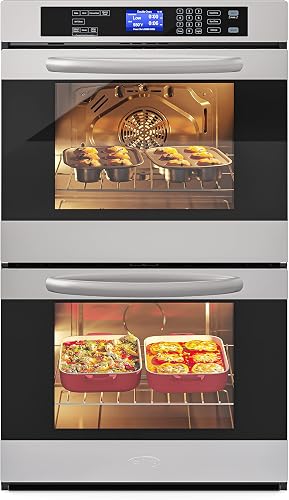
Many modern convection ovens, including double wall ovens, have a setting that adjusts the temperature for you. With auto-convert active, you enter the conventional temperature from the recipe and the oven handles the reduction internally. The Samsung NV51K6650DG/AA and COSMO COS-30EDWC are convection double wall ovens that can take much of the guesswork out of this. Check your manual to see whether your model converts on its own or expects you to lower the temperature manually.
When Not to Use Convection
Convection isn't ideal for everything. Delicate items that rise, such as souffles, custards, and some cakes, can be disturbed by the moving air and bake unevenly or crack. Quick breads and certain pastries may also do better in conventional mode. If a recipe specifically warns against a fan or you're baking something that needs a still, gentle environment, switch convection off and bake conventionally.
Best Foods for Convection
Convection shines with roasting and anything you want crisp and evenly browned. Roast meats, sheet-pan vegetables, multiple trays of cookies, and crispy potatoes all benefit from the circulating air. It's especially handy when you're cooking on more than one rack at once, since the fan keeps the heat consistent top to bottom. A spacious oven like the KoolMore KM-WO30D-SS makes multi-rack convection cooking practical for big meals.
Verify with a Thermometer
No conversion rule beats checking actual doneness, especially with meat and baked goods. Use an instant-read thermometer for roasts and the toothpick or touch test for cakes and breads. Because convection runs faster, build a habit of checking several minutes before the adjusted time is up. Once you've made a recipe in your specific oven a couple of times, you'll dial in the exact settings that work best.
Frequently asked questions
Do I lower the temperature or the time for convection?
Do one or the other, not both. Either drop the temperature by 25 degrees Fahrenheit or keep the temperature and shorten the cooking time by about 25 percent.
Does my oven adjust the convection temperature automatically?
Some do. Many convection ovens have an auto-convert mode where you enter the conventional temperature and the oven lowers it internally. Check your manual to confirm.
What should I not cook in convection mode?
Avoid convection for delicate, rising dishes like souffles, custards, and some cakes, since the moving air can disturb them and cause uneven baking or cracking.
Why does convection cook faster?
A fan circulates hot air around the food, so heat transfers more efficiently and evenly than in a still conventional oven, reducing cook time and improving browning.