How to Use a Convection Oven (And Actually Get Great Results)
Convection ovens cook faster and more evenly than conventional ones, but only if you know how to use them right.
If you have a convection oven and mostly leave it on the regular bake setting, you are not alone. A lot of people find the convection mode a little mysterious and stick with what they know. The good news is that convection is not complicated once you understand what the fan is actually doing. This guide walks you through the basics, the adjustments you need to make, and which foods benefit most.


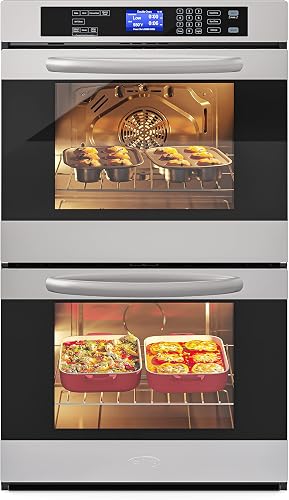
What Makes Convection Different
A conventional oven heats air and lets it sit still around your food. A convection oven adds a fan that circulates that hot air continuously. Moving air transfers heat more efficiently than still air, which means food browns faster and cooks more evenly from all sides. Some ovens also add a third heating element near the fan, which is sometimes called true convection or European convection. The result in either case is shorter cook times and better browning, especially on roasted meats and baked goods that benefit from a crisp exterior.
The Standard Temperature and Time Adjustments
When you switch from conventional to convection, the standard rule is to reduce your oven temperature by 25 degrees Fahrenheit, reduce the cook time by about 25 percent, or do some of both. Most home cooks find it easiest to drop the temperature by 25 degrees and keep the original time as a starting point, then check for doneness a few minutes early. If your oven has a convection convert or auto-adjust feature, it may handle this calculation for you automatically. Either way, always rely on a food thermometer or the visual cues in your recipe rather than time alone.
When to Use Convection Mode
Convection shines with roasted vegetables, whole chickens and turkeys, sheet-pan dinners, and anything where a crispy exterior matters. Pies and tarts with pastry crusts also do well because the moving air sets the crust quickly without making it soggy. Cookies and sheet cakes are another strong use case since multiple racks cook more evenly when air can circulate around each pan. Basically, if browning and crispness are goals, convection is your friend.
When to Skip Convection
Not everything benefits from a fan. Delicate baked goods like souffles, quick breads, and custards can be disrupted by moving air and may cook unevenly or deflate. Angel food cakes and chiffon cakes fall into this category too. Anything with a light, moist batter that needs to set gradually is generally better in conventional mode. The same goes for casseroles covered with foil, where airflow cannot reach the food anyway.
Tips for Using Multiple Racks
One of the best practical advantages of convection is that you can use two or three racks at once without the items on the bottom rack coming out pale and undercooked. The circulating air evens out hot spots so all racks get roughly the same heat exposure. Rotate pans halfway through if your oven has any uneven hot zones, but in a well-functioning convection oven this is often not necessary. Give pans a little breathing room on each rack so air can actually move around them.
Pans and Cookware That Work Best
Low-sided pans and sheet pans work better in convection than deep roasting pans because air can flow over and around the food. Dark pans absorb more heat and can cause over-browning with the added efficiency of convection, so consider switching to lighter-colored pans or dropping the temperature a few extra degrees if you notice the bottoms cooking too fast. Avoid covering food with foil unless the recipe specifically calls for it, because foil blocks the air circulation that makes convection worth using.
Getting Familiar With Your Specific Oven
Every oven is a little different, and convection settings vary by brand and model. Some ovens have separate convection bake and convection roast modes that use the fan differently. Read through your owner's manual to understand what each setting does, then run a few test batches with foods you already know well so you can learn how your oven behaves. Once you have a feel for it, convection becomes the default mode for most savory cooking and many baked goods.
Frequently asked questions
Do I always need to adjust the temperature when using convection?
It depends on your oven. Some models with a convection convert feature automatically lower the temperature for you when you select convection mode. If yours does not, the standard guideline is to reduce the set temperature by 25 degrees Fahrenheit. When in doubt, start with a small reduction and check for doneness early.
Can I use convection for baking cookies?
Yes, cookies are actually one of the best uses for convection. The circulating air helps them bake evenly across multiple pans at once and promotes a consistent golden-brown exterior. Drop the temperature slightly from the recipe and start checking a few minutes before the stated time since they will be ready sooner.
Why is my convection oven drying out my food?
The moving air in a convection oven can evaporate surface moisture faster than a conventional oven. For foods that should stay moist, like a pot roast or a bread loaf, consider covering the dish with a lid or foil for most of the cook time and removing the cover only at the end to let the surface brown. Reducing the temperature slightly can also help.
What is the difference between convection bake and convection roast?
These are two separate modes offered by some ovens. Convection bake typically uses the fan with the lower heating element and is intended for baked goods. Convection roast uses the fan with the broil or upper element and is optimized for meats that need browning on top. Check your oven manual to see which elements each mode activates.
Is a double wall oven worth it if I want convection?
A double wall oven is a great pairing with convection because it gives you two independent ovens, often both with convection capability. You can roast a chicken in one cavity on convection while baking a delicate cake in conventional mode in the other. Many of the double wall ovens on the market today include convection as a standard feature.