Inverter vs Standard Microwave: What Actually Changes in Your Kitchen
A standard microwave controls power by cycling its magnetron fully on and fully off in rapid pulses, which causes uneven cooking and rubbery edges on delicate food. An inverter microwave delivers a true continuous stream of power at whatever level you set, so proteins defrost evenly and sauces reheat without scorching the edges first. The difference matters most when precision is on the line; for quick tasks like boiling water or heating popcorn at full power, both types perform identically.

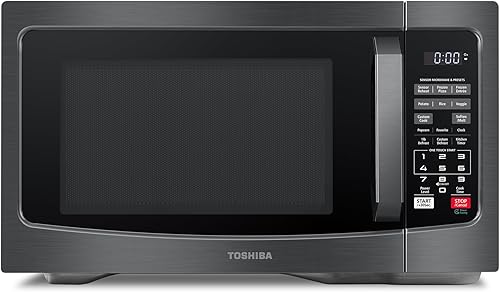

How Standard Microwaves Actually Control Power
A conventional microwave has one speed: full blast. When you dial in 50% power, the magnetron runs at its rated wattage for a few seconds, switches completely off, then fires again in a repeating on-off cycle. This pulsing is why the outside of a casserole can reach near-boiling while the center stays cold, and why defrosting a chicken breast on a standard microwave often cooks the thin edges before the thick part thaws. The cycle rate is fixed by hardware, so there is no way to make a standard machine deliver genuinely steady low power regardless of how many power levels the dial shows. A model like the Toshiba EM131A5C-BS runs at 1000 watts with 10 power levels and handles everyday reheating tasks reliably, but it still pulses at each of those settings.
What Inverter Technology Actually Does
Inverter-based microwaves replace the heavy electromagnetic transformer found in standard units with a compact inverter circuit that adjusts the actual wattage delivered to the magnetron in real time. Set the unit to 50% and it runs the cavity at a true half-power for the entire cook time rather than toggling between full blast and silence. That continuous energy penetrates food more gradually and uniformly, which is why inverter models excel at defrosting, simmering delicate sauces, and reheating dense casseroles without dried-out corners. The Panasonic NN-SN65KB uses Inverter Technology, runs at 1200 watts, and holds 1.2 cubic feet across 11 power levels, making it one of the most widely purchased inverter countertop microwaves for home kitchens.
Where the Difference Shows Up at the Dinner Table
Defrosting is the clearest real-world gap between the two technologies. On a standard microwave, the outer layer of a frozen piece of salmon starts cooking while the inside is still ice because the magnetron blasts at full wattage in short bursts. An inverter model holds a gentle, steady output that coaxes the protein to thaw gradually without cooking the edges first. The same logic applies to reheating soups and stews: a standard machine heats liquid near the walls to near-boiling while the center is lukewarm, whereas inverter power spreads heat more evenly across the bowl. For tasks where timing precision does not matter, such as boiling water or heating a bag of popcorn, neither technology has a meaningful edge over the other.
Wattage and Capacity: What the Numbers Mean
Wattage tells you how quickly a microwave can add heat, not how evenly it distributes it. A 1200-watt standard microwave cooks faster at full power than a 900-watt inverter model, but that higher-wattage standard unit still pulses unevenly at reduced settings. Capacity in cubic feet tells you the interior volume. A 1.2 cubic foot model fits a standard dinner plate; the GE JES2051SNSS lands at 2.0 cubic feet and 1200 watts, with 10 power levels, and suits households that regularly heat large casseroles or wide platters. Bigger is not always better since larger cavities heat small portions less efficiently, so match capacity to the dishes you actually cook.
Which Type Fits How You Cook
Standard microwaves are the right call for households that mainly reheat beverages, make popcorn, heat frozen meals at full power, or use the microwave infrequently. Inverter microwaves earn their keep when you regularly defrost proteins from frozen, cook fish or eggs in the microwave, temper chocolate, or want consistent results at every power setting. The Panasonic NN-SE985S, which uses Inverter Technology and holds 2.2 cubic feet at 1250 watts, is a strong fit for larger families or anyone who wants built-in-capable dimensions and true variable power in the same unit. Both types of microwave are electric appliances pulling from a standard 120-volt household outlet, so installation is identical; the only real decision is cooking performance versus upfront cost.
Common mistakes to avoid
- Assuming more power levels means more even cooking on a standard microwave: a standard unit with 10 levels still pulses the magnetron fully on and off at every setting.
- Buying capacity you do not need: a 2.0 cubic foot unit takes up more counter space and heats small portions less efficiently than a 1.2 cubic foot model.
- Using full power for everything: even on a standard microwave, reducing to 50 or 70 percent for dense foods like casseroles gives more even results, though it still will not match true inverter performance.
- Ignoring turntable diameter: a 10-inch turntable will not fit a standard dinner plate; verify the turntable spec matches the dishes you plan to heat.
- Choosing wattage over technology type and being surprised that a 1200-watt standard microwave still cooks the edges of defrosted fish while the center stays frozen.
- Expecting an inverter microwave to fix poor technique: covering food, stirring partway through, and resting after cooking still matter regardless of power technology.
Frequently asked questions
Is an inverter microwave worth the extra cost?
It depends on how you cook. If you defrost proteins, reheat layered dishes like lasagna, or cook eggs and fish in the microwave on a regular basis, the steady power delivery makes a noticeable difference in texture and results. If your use is mostly reheating simple items or running things at full power, a quality standard model at a lower price point will serve you well.
Do inverter microwaves cook faster than standard microwaves?
Not necessarily. Both types run at similar wattage levels, so cook times are roughly comparable for tasks like boiling water or heating soup. The advantage of inverter technology is cooking evenness and quality at partial power settings, not raw speed. A 1200-watt inverter microwave and a 1200-watt standard model will heat a cup of water in about the same time.
Can I use a low power setting on an inverter microwave to actually simmer food?
Yes, and this is one of the most practical uses for inverter technology. Because the power output is continuous rather than pulsed, setting the unit to a low level creates something close to a genuine simmer. Soups, custards, and sauces that would boil over or scorch on a standard microwave at the same nominal setting cook much more gently and evenly with true variable power.
What wattage is enough for a countertop microwave?
For most household tasks including reheating, defrosting, and basic cooking, 900 to 1200 watts covers the full range of practical needs. Units below 700 watts heat slowly and can struggle with dense foods. Above 1200 watts the speed gains are marginal for most home cooking, and the larger, heavier cabinets cost more without delivering proportional benefit in everyday use.
Are there standard microwaves that get close to inverter results?
Standard models with 10 or 11 power levels, like the Toshiba EM131A5C-BS at 1000 watts, offer more granular control than three-level models and can reduce hot spots somewhat by shortening each on-off pulse cycle. However, they are still cycling at full wattage between off periods, so they do not replicate true inverter performance for delicate defrosting or low-power cooking tasks.