How Much Wattage Do You Actually Need in a Countertop Microwave?
Microwave wattage determines how quickly and evenly the appliance heats food. Most countertop microwaves run between 700 and 1200 watts, and the difference matters: a 700W model can take nearly twice as long as a 1200W unit on the same task, and it is more prone to cold spots on thick or dense foods. For everyday family cooking, 1000 to 1100 watts hits the sweet spot between performance and price.


What Wattage Really Measures
Wattage is the output power your microwave delivers directly to food, not the draw from the wall outlet. A 1000W rating means 1000 watts of electromagnetic energy is actually cooking your food. That matters because higher wattage means faster, more uniform heat penetration through whatever is in the cavity. The practical gap between 700W and 1200W is significant: something that takes 3 minutes at 700W takes roughly 100 seconds at 1200W. Frozen food packages typically assume an 1100W appliance, so if your microwave is lower you will need to add time or risk cold centers.
700 to 800 Watts: Light Use, Tight Spaces
The 700W and 800W tier covers the most compact, least expensive countertop microwaves. Warming a mug of coffee, melting butter, or reheating a single portion of soup works fine at this power level. The shortfall shows up on anything dense or frozen: a thick casserole or frozen entree will often be hot on the edges and cold through the middle, requiring multiple stops to stir. The COMFEE EM720CPL-PMB (700W, 0.7 cu ft, 11 power levels) has earned a 4.4-star average from more than 28,000 buyers at around $68, and it demonstrates exactly where this wattage tier excels: light daily use in a small kitchen where counter space is at a premium. If defrosting meat or cooking complete dishes is not part of your routine, 700W is a reasonable, budget-conscious choice.
900 Watts: A Step Up for Solo Cooks
At 900 watts, performance on denser foods improves noticeably without requiring a physically larger unit. Small cuts of chicken or fish defrost more evenly, and reheating a bowl of rice or pasta from the refrigerator takes closer to two minutes rather than three or more. This tier is common among compact 0.9-cubic-foot models, which suits a studio apartment or a single-person household well. If you occasionally defrost small portions and your cooking stays simple, 900W is a practical middle tier between the budget category and the mid-range.
1000 to 1100 Watts: The Right Fit for Most Home Cooks
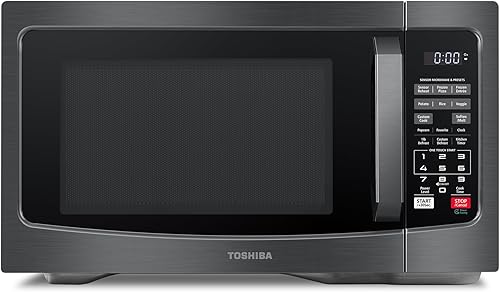
A 1000W microwave handles the full range of everyday tasks reliably. Frozen dinners reach the target temperature in the time printed on the box. Defrosting a pound of ground beef takes about eight minutes and comes out thawed rather than partially cooked on the edges. The Toshiba EM131A5C-BS is a standout example at this tier: 1000W output, 1.2 cu ft capacity, 10 power levels, and a 12.4-inch turntable that fits standard dinner plates, rated 4.4 stars from more than 32,000 verified buyers at under $150. For a household cooking three meals a day and relying on the microwave for defrosting, reheating, and steaming vegetables, the 1000 to 1100 watt range is where value and daily usefulness intersect.
1200 Watts and Up: Faster Results with Inverter Technology
At 1200 watts, cook times drop further and conventional models at this power handle bulky casseroles and full dinner plates without the hesitation you notice at lower wattage. The real advantage at 1200W, however, comes from inverter-equipped models. Standard microwaves achieve lower power settings by switching the magnetron fully on and off in rapid pulses; inverter models deliver a genuine continuous output at whatever level you set. The Panasonic NN-SN65KB (1200W, 1.2 cu ft, inverter technology) reflects this in its strong buyer demand and a 4.3-star rating from over 2,400 reviewers. For anyone who regularly cooks eggs, fish, or chocolate in the microwave, inverter technology at 1200W gives you control that is not available at lower power tiers.
Matching Wattage to How You Actually Cook
The most useful way to decide is to list your five most common uses before shopping. If they are reheating beverages, warming single servings, and melting small amounts of butter, a 700 to 900W model is enough. If you defrost proteins weekly, heat frozen family-sized entrees, or steam vegetables, go to 1000W as a floor. If you rely on the microwave as a primary cooking tool for full dishes, inverter technology at 1200W gives the most consistent results on delicate foods. Also factor in cavity size and exterior dimensions: higher-wattage models are typically larger, so measure your counter space before committing to a specific unit.
Common mistakes to avoid
- Buying the cheapest 700W model and then struggling with cold spots every time you heat a frozen entree or thick casserole.
- Assuming wattage is the only performance variable, when the number of power levels and whether a model uses inverter technology matter just as much for even cooking.
- Ignoring exterior dimensions when comparing wattage tiers, since higher-watt models tend to be physically larger and may not fit your counter opening.
- Cooking frozen foods for the package time without adjusting for your actual microwave wattage, resulting in undercooked meals.
- Choosing a 700W model for a family of four, where slower heat times compound across multiple meals and daily use becomes visibly inconvenient.
- Skipping the power-level count, since a microwave with only three power levels limits your control regardless of peak wattage.
Frequently asked questions
Is 700 watts enough for a family?
A 700W microwave can handle a family's light tasks but becomes a bottleneck if you rely on it for defrosting meat, heating full dinner plates, or cooking frozen entrees. Cook times run 50 to 70 percent longer than a 1000W model, and cold spots in the center of dense food are common. Families cooking three meals a day will find the constant extra wait time and inconsistent results more frustrating than the savings justify.
What wattage is best for defrosting meat?
1000 watts or higher gives the most reliable results, and an inverter model at that wattage improves things further. Conventional microwaves defrost by cycling the magnetron fully on and fully off, which tends to cook the surface before the center thaws. Inverter technology delivers a true low-power stream that thaws meat evenly from the outside in. At a minimum, use a model with at least 10 power levels so you can run defrost cycles at 30 to 40 percent output.
Does higher microwave wattage cost more to run?
The electricity cost difference between wattage tiers is small in practice because microwaves run for very short periods, typically two to five minutes per use. A 1200W model that finishes a task in two minutes uses about the same energy as a 700W model that takes three and a half minutes to do the same job. Across a full year of daily use, the electricity cost difference between a 700W and a 1200W microwave is usually only a few dollars.
Do frozen food package times account for my microwave wattage?
Most frozen food instructions assume a 1100W microwave and say so in small print near the cooking directions. If your unit runs at 700W, you need to add roughly 50 to 60 percent to the listed cook time to reach the same result. Many packages include a wattage conversion table on the side panel. Always check that table and adjust accordingly rather than guessing, especially for products where food safety depends on reaching a minimum internal temperature.
What is the difference between a conventional and inverter microwave at the same wattage?
A conventional microwave hits a lower power setting by switching the magnetron fully on and fully off in rapid pulses, which creates bursts of high heat followed by nothing. An inverter model delivers a steady, reduced output at whatever power level you select. On practical terms this means inverter microwaves defrost more evenly, cook delicate proteins like fish without rubbery edges, and handle chocolate or butter without scorching. The difference is most apparent in the 1000 to 1200 watt range where you are most likely to cook full dishes rather than just reheat.