Single vs Double Wall Oven: What Actually Matters for Home Cooks
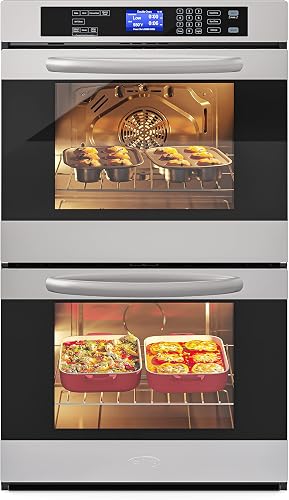
A single wall oven is one built-in electric or gas cavity installed in a cabinet cutout, typically running $500 to $1,500. A double wall oven stacks two independent cavities in the same column, letting you run two different temperatures, cooking modes, or convection settings at the same time. Choose a double if you frequently need to roast meat while baking a casserole, or if holiday cooking regularly has you juggling oven space.


What You Actually Get With Each Type
A single wall oven gives you one cavity, usually ranging from about 4.5 to 5.5 cubic feet, and a straightforward installation footprint. It draws less power from your 240-volt circuit and generally costs less upfront, both at the register and during installation. A double wall oven stacks two cavities in a single column that typically runs around 50 to 51 inches tall, with combined capacity often reaching 8 to 10 cubic feet or more. The Samsung NV51K6650DG/AA, for example, packs 5.1 cu ft of electric convection capacity into a 30-inch wide built-in double unit at around $1,099, showing that double ovens have become more accessible in price than they were a decade ago. Both types install into a wall or tall cabinet cutout and run on a standard 240-volt household circuit.
The Real-World Case for a Double Wall Oven
The strongest argument for a double wall oven is simultaneous cooking at two temperatures. Thanksgiving is the obvious example: the turkey needs 325 degrees while rolls want 400 and a pie needs 375. With a single oven you stage everything carefully and something always comes out cold. With a double, you run the upper and lower cavities independently, each with its own convection fan if the model supports it. The KoolMore KM-WO30D-SS delivers 10.0 cu ft of combined electric convection capacity at 8,500 watts across both cavities, giving you serious output for big-batch cooking. Frequent entertainers, households that batch-cook on weekends, and anyone who bakes regularly alongside roasting meats will find the double oven earns its higher price quickly.
Why Many Kitchens Are Better Off With a Single
Single wall ovens win on simplicity, upfront cost, and kitchen flexibility. If your household cooks one dish at a time most nights, a double oven's second cavity sits empty the majority of the year. Single ovens also give you more cabinet options below: you can place a drawer, a warming drawer, or a microwave in the space beneath, whereas a double oven fills the entire vertical run. Installation is cheaper because the cutout is smaller and the weight is lower. For cooks who do not regularly overlap two cooking tasks, a well-chosen single wall oven with reliable electric convection covers nearly every recipe with no compromises.
Capacity: How to Read the Numbers
Manufacturers list capacity in cubic feet per cavity, not combined. A double wall oven advertised at 5.0 cu ft typically means each cavity is 5.0 cu ft, for about 10 cu ft total, not 2.5 per side. The COSMO COS-30EDWC, a 30-inch wide built-in electric double at around $1,890, lists 5.0 cu ft and runs 4,800 watts, which lines up with each cavity holding a full-size roasting pan. When comparing a single to a double, check the per-cavity figure rather than the headline number so you know whether each chamber is genuinely useful or just a shallow second compartment. Most double wall ovens in the 27- to 30-inch width class deliver between 4.5 and 5.5 cu ft per cavity, which accommodates standard-size sheet pans and roasters without trouble.
Installation Requirements and Kitchen Planning
Both single and double wall ovens require a 240-volt, 30- to 50-amp dedicated circuit. The key difference is the cabinet cutout height: a single usually needs around 28 inches of vertical clearance, while a double needs roughly 50 to 52 inches, which means planning a full-height cabinet column rather than a standard upper or base unit. Width is standardized at 24, 27, or 30 inches across both types, with 30 inches being the most common in American kitchens. If you are retrofitting a double into a kitchen designed around a single, confirm your cabinet column is tall enough before ordering, and budget for any carpentry work needed to extend or modify the cutout. Most double wall ovens, like those from ZLINE and Frigidaire in this category, weigh between 215 and 290 pounds fully assembled, so professional installation is strongly recommended.
Cost Over Time: Price, Power, and Maintenance
Entry-level single wall ovens start around $500 to $700, while entry double wall ovens begin closer to $1,000 to $1,100. Mid-range doubles cluster between $1,800 and $2,500, and premium brands push well past $3,000. Running costs depend almost entirely on how often you use the second cavity: if it sits cold most of the time, your electric bill will not look much different from a single-oven household. Convection heating in either type distributes heat more evenly than radiant-only elements, which also tends to reduce cooking time and energy draw per meal. From a maintenance standpoint, a double oven has more components, two sets of heating elements, two doors, and potentially two control boards, so the statistical likelihood of a service call over a 10- to 15-year lifespan is modestly higher than with a single.
Common mistakes to avoid
- Comparing combined capacity to a single oven's per-cavity capacity, making the double look much larger than it really is per cooking chamber.
- Ordering a double wall oven without confirming the cabinet cutout height, then discovering the column is four to six inches too short after delivery.
- Assuming a double oven means double the power draw on your circuit when actually each cavity draws its rated wattage only when actively heating.
- Choosing a 27-inch width to save space, then finding that fewer accessory racks and baking pans are available in that size compared to the 30-inch standard.
- Buying a double oven purely for resale value without considering whether you will actually use both cavities, since a rarely used appliance that costs $1,000 more rarely pays off.
- Ignoring the installation cost difference between a single and double, which can add several hundred dollars once carpentry, electrical, and labor are factored in.
Frequently asked questions
Is a double wall oven worth the extra cost?
It depends squarely on how often you need two different temperatures running at the same time. For households that cook elaborate meals on weekends, host holiday gatherings, or batch-cook for the week, the second cavity pays off in convenience and time saved. For households where the oven is mostly used for one dish at a time, the premium is hard to justify on cost alone.
Can I replace a single wall oven with a double wall oven?
Yes, but you need to verify your cabinet column height before ordering. A double wall oven typically needs about 50 to 52 inches of vertical cutout clearance, while a single wall oven cutout is usually around 28 inches. You may need a cabinetmaker to extend the opening, which adds cost and time to the project. The width and electrical circuit requirements are usually the same.
Do both cavities in a double wall oven heat up at the same time?
Only if you turn both on. The upper and lower cavities operate independently, so you can preheat just one while the other stays off, or run both simultaneously at completely different temperatures. Each cavity has its own heating elements, its own controls, and in convection models, its own fan.
What width should I choose for a double wall oven?
Thirty inches is the most practical choice for most homes. It matches standard American cabinet widths, supports the widest selection of models and brands, and fits full-size sheet pans, roasting pans, and most bakeware without modification. The 27-inch size works for kitchens with narrower columns but limits your accessory and model choices. The 24-inch size exists but is rare and typically suited to compact or apartment kitchens.
Is electric the only option for wall ovens?
For double wall ovens, electric is essentially the only practical option available in the U.S. market. Gas double wall ovens exist but are uncommon and significantly more expensive. Electric double wall ovens, including convection models, run on a standard 240-volt household circuit and are what you will find from brands like Samsung, Frigidaire, COSMO, KoolMore, and ZLINE. If you prefer gas cooking, a gas range or gas single wall oven paired with an electric double is a common hybrid setup.