How to Choose the Right Wall Oven Size Before You Buy
Double wall ovens come in three standard widths: 24 inch, 27 inch, and 30 inch. The width of your existing cabinet cutout almost always decides which size you can buy. Combined electric capacity on a 30-inch unit typically runs 5 to 10-plus cubic feet across both cavities, while 24-inch models are tighter on interior space but fit smaller kitchens.

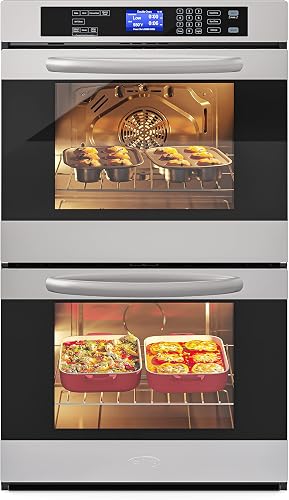
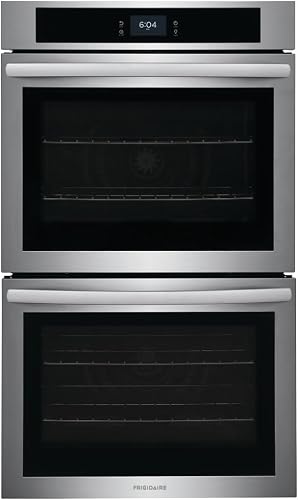
The Three Standard Double Wall Oven Widths
The market is built around three widths: 24, 27, and 30 inches. The 30-inch size dominates because it pairs naturally with 30-inch base cabinets and cooktops. A 27-inch oven is a middle-ground option that shows up mainly in older kitchen layouts where a 30-inch cutout was never framed in. The 24-inch category exists for compact kitchens or galley layouts where counter space is genuinely limited. Before you browse capacity or convection features, lock in the width you can actually use.
Cabinet Cutout vs. Oven Width: They Are Not the Same
The width printed on a product listing is the oven body’s outer dimension, not the cutout size your cabinet needs to provide. Manufacturers specify a separate cabinet cutout width, depth, and height in their installation guides, and those numbers are what you measure in your wall. The Samsung NV51K6650DG/AA, for example, has a 29.88-inch body width and overall dimensions of 25.69 x 29.88 x 51.38 inches, your cabinet opening must match the cutout spec in the manual, not simply equal 30 inches. Always download the installation guide for any oven you’re serious about before ordering.
How Oven Width Affects Total Capacity
Wider ovens give you more interior room in each cavity. A 30-inch double wall oven can combine both chambers into 10 or more total cubic feet. The Frigidaire FCWD3027AS is a 30-inch electric model with a combined capacity of 10.6 cubic feet, plenty of space to run the upper cavity for a roast and the lower for side dishes at a different temperature. Compare that to the KoolMore KM-WO30D-SS, a narrower 23.5-inch built-in with 10.0 cubic feet combined, achieved partly by a taller overall cabinet footprint. More width generally means a more spacious interior per cavity, which matters when you’re fitting a large roasting pan or a full sheet pan.
Measuring for a Double Wall Oven: What to Check
You need four measurements before shopping: cutout width, cutout height, cutout depth, and the distance from the front of the cabinet to any obstruction behind it. Double wall ovens are tall, most land between 50 and 52 inches in total height, so also verify your floor-to-counter clearance if you’re installing into a full-height cabinet tower. Depth matters too: the COSMO COS-30EDWC has a body depth of roughly 23.5 inches, and the cabinet must allow the oven to slide fully in with room for the power wiring at the rear. A tight fit on any one dimension can mean the oven physically cannot go in.
Electric vs. Fuel Type and Why It Matters for Sizing
Every double wall oven currently available in the mainstream market runs on electric power at 240 volts. That means your kitchen needs a dedicated 240-volt circuit, and the circuit’s amperage must match the oven’s draw. The KoolMore KM-WO30D-SS draws 8,500 watts, and the COSMO COS-30EDWC draws 4,800 watts, those are very different electrical loads, and the wiring in an older home may not support the higher end without an upgrade. Confirm your panel capacity and circuit wire gauge with an electrician before settling on a model. Gas double wall ovens are rare in this category, so if you have a gas line, a double wall configuration almost certainly means switching to electric.
When a 24-Inch or 27-Inch Model Makes Sense
If your current cabinet tower is framed for a 24-inch or 27-inch oven, replacing it with a 30-inch unit means tearing out and rebuilding cabinetry, a costly project. In that situation, staying with your existing cutout size is the practical choice. The Frigidaire FCWD2727AS is a 27-inch electric double wall oven with 7.6 cubic feet of combined capacity, which is enough for most home cooking scenarios without requiring a cabinet rebuild. A 24-inch double wall oven suits smaller households or secondary kitchens where two full-size cavities are more useful than raw cubic footage.
Common mistakes to avoid
- Measuring the oven’s outer width and assuming it equals the required cabinet cutout width.
- Forgetting to check the cutout height, double wall ovens typically need 50 to 52 inches of vertical opening.
- Ignoring the depth spec and finding the oven won’t fully recess because wiring or framing is too close.
- Assuming a 30-inch oven automatically fits a 30-inch cabinet without checking the manufacturer’s cutout sheet.
- Buying a high-wattage model without first confirming the home’s electrical panel can support a 240-volt circuit at the required amperage.
- Choosing capacity in cubic feet before confirming the width that actually fits the existing wall opening.
Frequently asked questions
What is the most common double wall oven size?
The 30-inch width is by far the most common, and the majority of double wall ovens on the market are built around it. It aligns with standard 30-inch base cabinets and cooktops, so most kitchen remodels already have a 30-inch cabinet tower framed in. If your kitchen was designed after 1990, there’s a good chance a 30-inch oven is what will fit.
How much cabinet height do I need for a double wall oven?
Most double wall ovens require a cabinet cutout height between 50 and 52 inches. The COSMO COS-30EDWC, for example, has an overall body height of about 51.18 inches, and the Samsung NV51K6650DG/AA measures 51.38 inches tall. Always check the specific model’s installation guide for the exact cutout height rather than relying on overall product dimensions.
Can I replace a single wall oven with a double wall oven without rebuilding cabinets?
It depends on what is above or below the existing single oven in the cabinet tower. A double wall oven is roughly twice as tall, so in most cases you would need to extend the cutout significantly or replace the entire cabinet column. If your single oven sits in a tall tower with extra space above or below, a contractor can sometimes enlarge the opening without a full rebuild, but it is rarely a straightforward swap.
Does a wider oven always mean more cooking capacity?
Generally yes, but it is not a fixed rule. A 30-inch model typically offers more cubic feet per cavity than a 24-inch model, but total combined capacity also depends on how tall each cavity is within the unit. The Frigidaire FCWD3027AS delivers 10.6 cubic feet combined in a 30-inch frame, while some 30-inch competitors sit closer to 5 cubic feet combined, so always check the stated capacity rather than assuming width alone tells the whole story.
Do I need a special electrical circuit for a double wall oven?
Yes. All double wall ovens run on 240 volts and require a dedicated circuit, they cannot share a circuit with other appliances. The amperage requirement varies by model wattage; a unit drawing 8,500 watts at 240 volts needs a roughly 40-amp circuit, while a lower-wattage model may work on a 30-amp line. Have a licensed electrician verify your panel capacity and run a new circuit if needed before the oven arrives.