Dual Fuel vs Gas Range: What Actually Matters for Home Cooks
A dual fuel range pairs gas burners with an electric convection oven, giving you responsive flame control on top and steadier, more even heat below. A gas range runs entirely on natural gas or propane, with both the cooktop and oven powered by a gas flame. Dual fuel ranges cost more upfront and require both a gas line and a 240-volt electrical circuit, while gas ranges need only a gas connection and a standard 120-volt outlet.


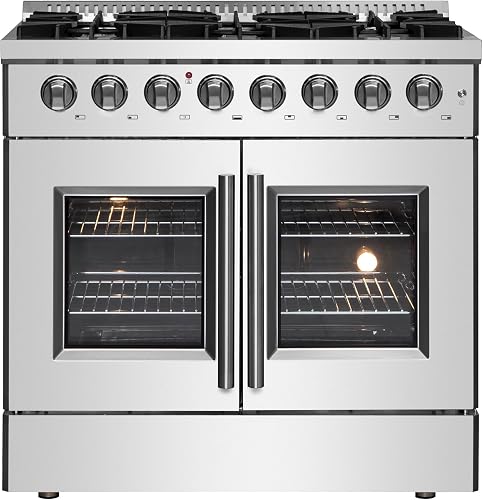
How the Cooktop Compares: Gas Burners on Both Types
Here is the thing most buyers overlook: on a dual fuel range, the cooktop is gas, just like on a full gas range. You get the same open or sealed burners, the same instant visual flame adjustment, and the same BTU output on either type. So if your main reason for choosing gas is stovetop cooking, you will not gain or lose anything by going dual fuel. The real difference lives entirely in the oven compartment, which is why this decision comes down to how much you bake versus how much you saute.
Oven Performance: Where Dual Fuel Has a Real Edge
Gas ovens are notorious for uneven heat because a single burner at the bottom creates temperature pockets that rise unpredictably. Electric ovens use heating elements on both top and bottom and often include a convection fan that circulates air for consistent temperatures throughout the cavity. Dual fuel ranges combine gas burners up top with an electric oven below, which is why serious bakers prefer them. Cookies, cakes, and roasts benefit from that even, dry electric heat in a way that a gas oven cannot match. The ZLINE Kitchen and Bath RA-SN-36, for example, pairs 6 sealed gas burners with a 4.6 cubic foot dual fuel electric oven in a 36-inch wide freestanding body, giving you serious cooking real estate at both levels.
Installation Requirements and What They Cost You
A gas range needs a gas supply line, a shutoff valve, and a standard 120-volt outlet for the clock and igniter. A dual fuel range needs all of the above plus a dedicated 240-volt circuit, the same heavy line that powers an electric dryer or a standalone electric range. If your kitchen already has both a gas hookup and a 240-volt outlet nearby, the upgrade is painless. If you need an electrician to run a new circuit, budget $200 to $600 depending on your panel distance and local labor rates. Older homes with smaller electrical panels may face an upgrade cost on top of that.
Price Difference: What You Are Actually Paying For
All-gas ranges span from entry-level freestanding models around $750 to professional-grade units well above $4,000. Dual fuel ranges start higher because of the added electric oven components, typically landing $500 to $1,500 above a comparable all-gas model from the same brand. The GE JGBS30DEKBB is a solid example of what a quality all-gas range looks like: a 30-inch freestanding model with a 4.8 cubic foot oven, open burners, and knob controls at around $758, rated 4.5 stars across 26 reviews. Step up to a dual fuel option like the Forno FFSGS6356-36, a 36-inch freestanding model with 6 sealed gas burners, 5.36 cubic feet of oven capacity, and true dual fuel operation at around $3,199, and you are paying specifically for that electric oven precision.
Running Costs: Gas vs Electric Oven Over Time
Natural gas is almost always cheaper per BTU than electricity in the United States, so a full gas range will cost a bit less to operate than a dual fuel model where the electric oven draws from the grid. The difference is real but modest for most households, typically $30 to $80 per year depending on your utility rates and how often you bake. If you live in a state with high electricity prices, that gap widens. If your gas rates are high, it narrows. For most home cooks, the performance advantage of an electric oven outweighs the small operating cost difference.
Who Should Choose Each Type
Choose a dual fuel range if you bake regularly, cook for a crowd, or want convection roasting performance without a separate wall oven. The ZLINE Kitchen and Bath RA-SN-36 illustrates what dual fuel looks like in a 36-inch package: 6 sealed gas burners, 4.6 cubic feet of oven space, and a brushed stainless finish priced around $2,975, rated 4.1 stars. Choose an all-gas range if your kitchen lacks a 240-volt circuit, if you primarily cook on the burners rather than baking, or if you want to keep purchase and installation costs down. Cooks in areas with frequent power outages may also prefer all-gas since the oven still works during an outage, whereas the electric oven portion of a dual fuel range will not.
Common mistakes to avoid
- Assuming a dual fuel range has better burners than an all-gas model when the cooktop is gas on both types
- Forgetting to check for a 240-volt outlet before ordering a dual fuel range, then facing a surprise electrician bill
- Choosing a 30-inch dual fuel range when a wider model at similar price offers significantly more oven capacity in cubic feet
- Overlooking the gas oven hot spot problem and expecting all gas ovens to bake as evenly as electric ones
- Treating an all-gas range as inferior when it is the simpler and more cost-effective choice for stovetop-heavy cooks
- Ignoring oven capacity specs: cubic footage varies significantly between models at the same price, so always compare that number directly
Frequently asked questions
Is a dual fuel range worth the extra cost?
It depends almost entirely on how much baking and roasting you do. If you use the oven several times a week and care about even browning and consistent temperatures, the electric oven in a dual fuel range delivers a noticeable improvement over a gas oven. If you mostly fry, saute, and simmer on the burners, you will not notice enough difference in the oven to justify the price gap.
Can I use a dual fuel range if I only have a gas line?
No. A dual fuel range requires both a gas connection for the cooktop burners and a 240-volt dedicated electrical circuit for the oven. If your kitchen only has a gas hookup, you will need a licensed electrician to install a 240-volt circuit before you can use a dual fuel range. This is not a DIY task and skipping it is a code violation.
Do dual fuel ranges work during a power outage?
Partially. The gas burners on a dual fuel range can sometimes be lit manually during a power outage depending on the model, though you should check the manufacturer specifications before counting on this. The electric oven will not function without power under any circumstances. A full all-gas range is the better choice if power reliability is a concern for you.
What is the main advantage of an all-gas range over dual fuel?
Simplicity and lower upfront cost. An all-gas range needs only a gas line and a standard 120-volt outlet, so installation is straightforward in most kitchens. Purchase prices are generally lower for comparable sizes, and you avoid the need for a 240-volt electrical circuit. For cooks who prioritize stovetop work and want a no-fuss setup, all-gas is the practical choice.
Does fuel type affect oven capacity?
Fuel type itself does not determine oven capacity, but the model and width you choose does. Capacity is measured in cubic feet and varies by manufacturer and size class, regardless of whether the oven is gas or electric. A 30-inch gas range might offer 4.8 cubic feet while a 36-inch dual fuel model stretches to 5.36 cubic feet. Always compare the capacity spec directly when choosing between models.