Picking the Right Range Width for Your Kitchen
Most home kitchens are built around a 30-inch freestanding range, which gives you four or five burners and enough oven capacity, usually 4.8 to 6 cubic feet, to cook a full holiday meal. If your cutout or counter run is tighter, compact 20- to 24-inch models are built for apartments, studio kitchens, and RVs. Serious home cooks who entertain frequently may want a 36-inch range, which adds a sixth burner and a larger oven without requiring a full professional installation.


Standard 30-Inch Ranges: The Right Size for Most Homes
A 30-inch freestanding range slots into the opening found in the vast majority of American kitchens and typically delivers 4 to 5 burners alongside an oven in the 4.8 to 6.0 cubic foot range. That oven capacity handles a 25-pound turkey, a 9x13 casserole, and two sheet pans at once without crowding. Whether you choose gas with sealed burners for quick heat adjustment or electric for more even bake temperatures, you will find the widest selection and the most competitive prices at this width. The GE JGBS30DEKBB is a 30-inch freestanding gas range with 4.8 cubic feet of oven space and knob controls, a straightforward, well-reviewed option that fits a standard opening cleanly. If you are unsure what size your kitchen is built for, measure the gap between cabinets before assuming it is 30 inches.
Compact 20- to 24-Inch Ranges: Apartments, Condos, and Small Kitchens
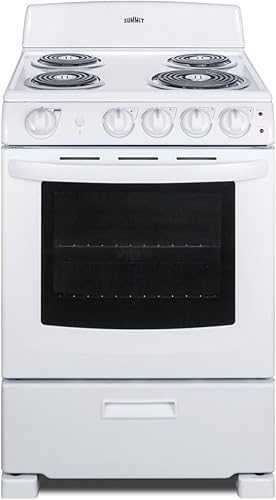
Tight kitchens in city apartments, in-law suites, and older homes often have openings as narrow as 20 or 24 inches. Ranges built for these spaces still deliver four burners and a usable oven, just with a smaller cavity, typically 2.3 to 2.9 cubic feet, which is plenty for everyday cooking but limits large-batch baking. The Summit Appliance RE2411W is a 24-inch-wide electric freestanding range with a 2.9 cubic foot oven, sealed burners, and over 100 buyer reviews, one of the most purchased compact ranges in this category. At 23.5 inches wide and 23.5 inches deep, it fits snugly without requiring any cabinet modification. Compact ranges are also common in basement kitchens and accessory dwelling units where space efficiency matters more than oven volume.
Wide 36-Inch Ranges: More Burners, More Oven, More Commitment
A 36-inch range typically adds a fifth or sixth burner and pushes oven capacity past 5 cubic feet, sometimes reaching 6 cubic feet or more. This extra width is genuinely useful if you cook multi-course dinners regularly, run a large household, or want a dedicated low-simmer burner without giving up your high-BTU sear burner. The Thor Kitchen LRG3601U is a 36-inch freestanding gas range with 6 burners, a 6.0 cubic foot oven, and 3 racks, built for the home cook who wants professional-style layout without a full commercial installation. Keep in mind that moving to 36 inches often means modifying existing cabinetry or building a custom range surround, which adds to the overall project cost. Dual fuel versions at 36 inches, gas cooktop, electric convection oven, appeal to bakers who want precise oven temperatures paired with responsive gas burners.
Oven Capacity: What Cubic Feet Actually Means at the Dinner Table
Manufacturers measure oven capacity in cubic feet, and the difference between 2.9 and 6.0 cubic feet is significant in practice. A 2.9 cubic foot oven comfortably fits a 9x13 baking dish and a standard roasting pan, but you will struggle to fit more than one rack of cookies at a time. A 5.0 to 6.0 cubic foot oven lets you run two or three racks simultaneously, which matters when you are cooking Thanksgiving sides all at once or batch-baking for the week. The Samsung NX60A6511SS is a 30-inch gas range with 6.0 cubic feet of oven space and 3 racks, an example of how a standard-width range can still deliver generous oven volume. If oven capacity is a priority, check that spec number directly rather than assuming a wider range always means a bigger oven.
Fuel Type and Width: How They Work Together
Gas ranges are available across all three standard widths and are preferred by cooks who want instant heat control and the ability to use any cookware, including carbon steel and cast iron. Electric ranges, including smooth ceramic cooktops, are easier to clean and tend to produce more consistent bake temperatures, while induction requires compatible magnetic cookware. Dual fuel ranges pair a gas cooktop with an electric oven and are most commonly found in the 30- and 36-inch sizes. If you are shopping for a compact 20- to 24-inch range, gas options exist but the selection is narrower; electric is the dominant fuel type at that width. Induction in a compact range format is rare, but separate induction cooktops paired with a wall oven are a practical alternative in small spaces.
How to Measure Your Space Before You Buy
Pull out your current range and measure the width of the opening between the cabinets, not the width of the old appliance, since ranges can be slightly narrower than their rated size. Also measure the depth from the back wall to the front cabinet face, and the height from floor to countertop level. Most freestanding ranges run about 28 to 29 inches deep, and standard counter height is 36 inches, but slide-in models sit flush with the counter and need a precise height match. Confirm you have the right fuel hookup before ordering: gas ranges need a 120-volt outlet for ignition and controls, while electric ranges typically require a dedicated 240-volt circuit. If you are switching fuel types, budget for a licensed plumber or electrician to run the new line or outlet.
Common mistakes to avoid
- Measuring the old range instead of the cabinet opening, these can differ by an inch or more.
- Assuming 30 inches is universal; apartment kitchens and older homes frequently have 20- or 24-inch openings.
- Choosing a 36-inch range without accounting for cabinet modification costs, which can run several hundred dollars.
- Confusing cubic feet of oven capacity with overall range size, a 24-inch range can still have a respectable oven if the design is efficient.
- Ordering a gas range without confirming the gas line location, or an electric range without verifying a 240-volt circuit is present.
- Ignoring depth: a range that sticks out past the counter can prevent cabinet doors from opening fully.
Frequently asked questions
Is a 30-inch range the most common size?
Yes, 30 inches is the standard width for freestanding ranges in the United States and the size most kitchen layouts are built around. It offers a practical balance of burner count, oven capacity, and price. The vast majority of replacement ranges at this width will drop straight into an existing 30-inch opening without any cabinet work.
What is the real difference between a 24-inch and a 30-inch range?
The main differences are oven capacity and cooking surface room. A 24-inch range typically has around 2.9 cubic feet of oven space compared to 4.8 to 6.0 cubic feet in a 30-inch model, roughly half the usable baking volume. Both formats usually offer four burners, but on a 24-inch model the burners sit closer together, which can make it harder to use large pots and skillets side by side.
Do I need a 36-inch range, or is 30 inches enough for a family of four?
A 30-inch range with 5.0 to 6.0 cubic feet of oven capacity is more than enough for a family of four for everyday cooking and holiday meals. A 36-inch model makes practical sense if you cook elaborate multi-course dinners regularly, need six burners running at once, or have the counter run and budget for a wider appliance. Most buyers who upgrade to 36 inches find they use the extra burners occasionally rather than daily.
Can I install a 30-inch range in a 24-inch opening?
No. A 30-inch range will not fit in a 24-inch cabinet opening without removing or cutting into the adjacent cabinetry. Always measure your opening before you shop. If you have a 24-inch opening, you need a range rated 24 inches wide or narrower, typically marketed as compact or apartment-size.
Does the fuel type affect what size range I can get?
Indirectly, yes. Gas and electric ranges are both widely available in 30-inch widths, giving you the most options. At compact 20- to 24-inch widths, electric ranges dominate and gas is less common. Dual fuel ranges are mostly found at 30 and 36 inches. If you want induction cooking in a compact space, a separate induction cooktop paired with a wall oven is often more practical than searching for a narrow induction range.