Gas vs Electric Range: Which Fuel Type Actually Works Better for Home Cooks?
Gas ranges give you instant, visible flame control that works well for searing, stir-frying, and simmering. Electric ranges heat more evenly across the cooktop surface and tend to produce more consistent oven temperatures. The right choice depends on your existing utility hookup, how you cook, and whether you are willing to pay for a new gas line or a 240-volt electrical circuit.

How the Cooktops Actually Differ
A gas burner produces an open flame that responds the moment you turn the knob, so going from a rolling boil to a bare simmer takes only a second. Electric coil and radiant ceramic elements take longer to change temperature, which can frustrate cooks who need quick adjustments. That said, electric cooktops sit flat and smooth, making them easier to clean after a spill since there are no grates or burner caps to scrub around. For most everyday cooking, sauteing, boiling pasta, or making sauces, both fuel types get the job done; the difference shows up most when you need rapid, precise heat changes.
Oven Performance: Electric Has the Edge
Electric ovens distribute heat more uniformly because the heating elements surround the oven cavity and radiate from multiple directions. Gas ovens vent combustion gases, which can create hot spots and slightly uneven baking results without a convection fan to compensate. If baking is central to how you cook, an electric oven tends to produce more even browning on cookies, cakes, and roasts. That is why dual fuel ranges, which pair gas burners with an electric oven, exist: they aim to give you the best of both fuel types in one appliance.
Installation Costs and What You Already Have
Gas ranges require a natural gas or propane supply line and a standard 120-volt outlet for the igniter and clock. If a gas line does not already exist in your kitchen, running a new one can add several hundred dollars to your project cost. Electric ranges need a dedicated 240-volt circuit, which many kitchens already have if a previous electric range was installed. Switching fuel types in either direction almost always means hiring a plumber or electrician, so the cheapest path is usually to match the fuel type already in your home. If you are building or doing a full kitchen remodel, get quotes for both before committing.
Running Costs Over Time
Natural gas is typically cheaper per unit of energy than electricity in most U.S. regions, so a gas range can cost less to operate month to month for heavy cooks. However, electricity and gas rates vary significantly by location, so check your local utility prices before assuming gas will save you money. Electric ranges convert nearly all input energy into heat, while gas flames lose some heat to the surrounding air, so efficiency comparisons are not always straightforward. For occasional home cooks, the difference in monthly utility costs is usually small enough that it should not drive the decision on its own.
Safety and Ventilation
Gas combustion produces small amounts of nitrogen dioxide and carbon monoxide, so adequate kitchen ventilation matters more with a gas range than with electric. A ducted range hood that moves air outside is the safest setup with any gas range. Electric ranges do not produce combustion gases, though both fuel types release steam, grease particles, and cooking smoke that a range hood should capture. If your kitchen has no ventilation at all, an electric range is the lower-risk choice until you can add a hood.
Which Ranges Are Worth Looking At
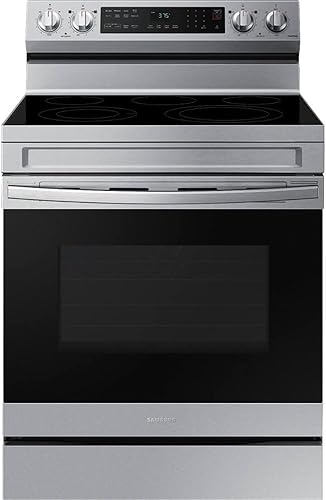
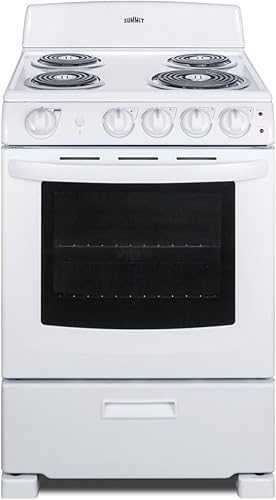
For buyers leaning toward gas, the GE JGBS30DEKBB is a freestanding 30-inch gas range with a 4.8 cubic foot oven and open burners, rated 4.5 stars across 26 buyer reviews at around $758. If electric is the better fit, the Samsung NE63A6511SS offers a 6.3 cubic foot electric oven with sealed burners and smart home compatibility for around $799, rated 4.1 stars by 19 buyers. For kitchens with limited space, the Summit Appliance RE2411W is a compact 23.5-inch electric range with a 2.9 cubic foot oven and sealed burners at around $771, backed by 117 reviews and a 4.0-star rating, making it one of the more widely purchased options in this category.
Common mistakes to avoid
- Switching fuel types without budgeting for the new gas line or 240-volt circuit installation
- Choosing gas without confirming adequate kitchen ventilation exists
- Picking an electric range expecting instant heat response and being frustrated by slower element adjustment
- Overlooking oven capacity when comparing models: a larger cubic foot rating means more room for sheet pans and roasting dishes
- Assuming gas always costs less to run without checking local electricity and gas rates first
- Buying a 30-inch range for a cutout sized for a 24-inch or 36-inch model without measuring the space
Frequently asked questions
Is a gas range better than electric for everyday home cooking?
Gas gives you more immediate visual and tactile control over burner heat, which many home cooks find intuitive for stovetop work. Electric ovens tend to bake more evenly, so neither type wins across every cooking task. If you do a lot of stovetop searing and stir-frying, gas has a practical edge. If you bake frequently, electric oven performance is usually more consistent.
Can I switch from gas to electric, or electric to gas?
Yes, but it requires professional work either way. Switching to gas means running a supply line and possibly adding a shutoff valve, which typically costs several hundred dollars depending on how far the line needs to travel. Switching to electric means upgrading or adding a 240-volt dedicated circuit if one does not already exist. Get quotes from a licensed plumber and electrician before deciding whether the switch makes financial sense.
Do gas ranges need electricity at all?
Modern gas ranges use electronic ignition, which requires a standard 120-volt outlet, and the oven light, clock, and control board all need power too. During a power outage you can often light gas burners manually with a match held to the burner, but the oven igniter typically will not work without electricity. This is different from older pilot-light models that operated fully without power.
What is a dual fuel range and is it worth the cost?
A dual fuel range pairs gas burners on the cooktop with an electric oven, aiming to combine the quick flame control of gas with the even baking of electric. These ranges cost more than a standard gas or electric model, and they require both a gas line and a 240-volt circuit. For serious bakers who also want gas burners, dual fuel can be worth the investment, but for most home cooks a quality single-fuel range handles everyday cooking just as well at a lower price.
How important is oven capacity when choosing a range?
Oven capacity matters most if you regularly cook large meals, roast whole birds, or bake multiple sheet pans at once. A larger oven in the 5 to 6 cubic foot range comfortably fits a full-size roasting pan plus a sheet pan on a second rack. Compact ranges with 2 to 3 cubic foot ovens work fine for singles or couples cooking smaller meals but can feel cramped during holiday cooking. Always check whether the interior dimensions match the pans you already own.