Slide-In vs Freestanding Range: What Actually Matters for Most Home Cooks

A freestanding range stands fully on its own with finished side panels and a rear control console, so it fits anywhere in the kitchen without requiring cabinetry on both sides. A slide-in range drops into the opening between two countertops with controls at the front and no finished sides, creating a seamless, almost built-in look at a fraction of true built-in cost. The core tradeoffs are price and installation flexibility: freestanding models cost less and swap in easily, while slide-in models require a proper counter cutout but deliver a polished kitchen aesthetic.

What Makes a Freestanding Range a Freestanding Range

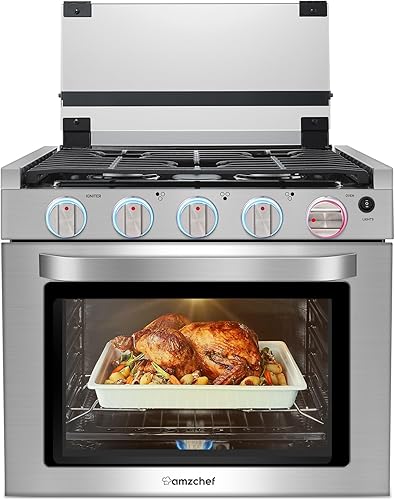
Freestanding ranges have finished enamel or stainless side panels so they can stand alone at the end of a counter run or between two cabinets without looking incomplete. The control knobs or digital panel sit on a rear console that rises above the cooktop surface, keeping the front of the range clean and uncluttered. Installation is the most straightforward of any range type: slide the unit into place, connect the gas line or the 240-volt electric circuit, and you are done. Most standard 30-inch freestanding gas ranges weigh between 150 and 180 pounds and fit into a rough opening without cabinet modification. The GE JGBS30DEKBB is a solid real-world example: a gas freestanding range with 4.8 cubic feet of oven capacity and open burners in a stainless finish, priced around $758.

What Sets a Slide-In Range Apart

Slide-in ranges are engineered to drop into a countertop cutout so the cooktop surface overlaps the counter edge on both sides, eliminating the grease-collecting gap that freestanding units leave behind. Controls move to the front of the unit below the cooktop, removing the rear console entirely and letting a tile or stone backsplash run uninterrupted behind the range. Because the sides are unfinished, a slide-in looks odd if placed against an open wall without surrounding cabinetry, so the installation requires two flanking counters of matching height. The GE PGS930YPFS demonstrates the type well: a 30-inch slide-in gas range with a 5.6 cubic foot oven, 5 sealed burners, 3 oven racks, and a fingerprint-resistant stainless finish, priced around $2,499. For a mid-market slide-in option, the COSMO COS-GRC305KTD offers a 6.1 cubic foot gas oven with knob-and-touch controls at roughly $1,553.

Cost Differences: What You Are Actually Paying For

Freestanding ranges dominate the value end of the market. Capable gas or electric models from established brands start well under $800, and even well-specified 30-inch units with convection typically stay under $1,200. Slide-in ranges carry a premium that reflects front-control engineering, tighter manufacturing tolerances for a flush fit, and the market segment they serve. Entry-level slide-in models generally start around $1,200 to $1,500, with mid-range gas slide-ins commonly running $2,000 or more. That price gap exists even when the underlying cooking specs, burner BTU ratings, and oven capacity are essentially equivalent. Part of the premium is pure aesthetics; part reflects that manufacturers tend to bundle more features into slide-in configurations because buyers in that segment expect them.

Kitchen Layout and Cabinetry: The Deciding Factor

Before committing to either type, assess the specific space the range will occupy. If the range sits between two runs of base cabinets with a continuous countertop, a slide-in fits naturally and the built-in appearance is easy to justify. If the range sits at the end of a counter run against a wall, a freestanding model is the practical choice because a slide-in with one or both sides exposed looks unfinished and shows the raw panel. Check cutout width carefully: freestanding ranges typically allow a quarter to half inch of wiggle room on each side, while slide-in models are built to tighter tolerances and some brands specify the opening must be within a quarter inch of the nominal width. A 36-inch space raises the same considerations but narrows your slide-in selection considerably compared to the standard 30-inch category.

Fuel Type Does Not Change the Decision

Both installation styles are available in gas, electric, induction, and dual-fuel configurations, so fuel type does not force one style over the other. Gas slide-in ranges like the GE PGS930YPFS offer sealed burners and large oven capacity in a front-control format. Electric and induction slide-in models are equally common at the mid-range and premium price points. For freestanding ranges, the gas and electric selection is broader across every price tier. Dual-fuel buyers who want gas burners paired with an electric convection oven will find options in both styles, though dual-fuel slide-in models concentrate at higher price points because the buyer willing to pay for dual fuel is usually the same buyer willing to pay for a slide-in aesthetic.

Cleaning and Everyday Practicalities

One concrete advantage of a slide-in is that the overlapping cooktop edge seals the gap between the range and the counter, which on freestanding models can trap spills, grease, and food debris that requires moving the range to clean properly. That gap is a genuine recurring irritant, and closing it by design is a real quality-of-life improvement for active cooks. Front controls on a slide-in, however, are more accessible to young children than the rear panel on a freestanding model, so households with small kids should check whether the specific slide-in model includes a control lockout feature. Rear controls on a freestanding unit are harder to reach over a full stockpot, but they are naturally out of reach for children. Neither layout is objectively better for all households; it is a tradeoff to weigh against your own situation.

Common mistakes to avoid

  • Ordering a slide-in range without measuring the countertop cutout to the model's exact specified dimensions, then finding the cooktop does not sit flush.
  • Buying a slide-in for an end-of-counter position where one or both sides are exposed, leaving unfinished panels visible against the wall.
  • Assuming a slide-in cooks better than a freestanding model when the real difference is cosmetic and installation style, not burner output or oven performance.
  • Forgetting to account for the rear console height on a freestanding range when a low microwave or cabinet is mounted directly above the range.
  • Choosing an electric slide-in without confirming a 240-volt outlet is within reach of the shorter power cord that slide-in models typically ship with.
  • Skipping the leveling step after installation, which on either type causes the oven door to drift open or closed and can produce uneven baking results.

Frequently asked questions

Can a slide-in range replace a freestanding range in the same cutout?

Usually yes, but measure the opening carefully first. A slide-in range is designed so the cooktop overlaps the counter edge on each side by an inch or so, which means the rough opening can be a little wider than the nominal range width without a visible gap. What matters most is that an equal-height countertop is present on both sides of the opening. If you are replacing a freestanding range that stood at the end of a counter run with only one flanking cabinet, the slide-in will leave the unfinished side exposed and look incomplete.

Do slide-in ranges need special installation beyond a standard range hookup?

The gas or electrical connections are identical to a freestanding range since both types use the same fuel hookups. The extra installation work for a slide-in involves verifying the cutout width matches the model's spec, trimming any counter lip or edge that prevents the unit from sitting flush, and positioning the anti-tip bracket correctly since slide-in brackets often anchor at a different floor location than freestanding models. Plan for an extra hour of setup time compared to a straight freestanding swap.

Is a slide-in range worth the higher price?

It depends on how much the aesthetic matters to you and whether your kitchen layout actually supports the slide-in design. If you are mid-renovation with new countertops going in, the incremental cost of a slide-in over a freestanding model is easy to justify for the seamless built-in look. If you are replacing a broken range in a kitchen you are not renovating, a freestanding model delivers the same cooking performance for significantly less money and fits the existing space without any counter modification.

What is the practical difference between front controls and rear controls day to day?

Rear controls on a freestanding range require reaching over the cooking surface to adjust burners or oven temperature, which can be awkward and is a burn risk if large pots are in the way. Front controls on a slide-in are easier to reach and read during cooking but sit lower, putting them within easy reach of young children. Households with small kids should look for a control lockout feature on any slide-in model they consider. Neither layout is universally better; it comes down to how your household uses the kitchen.

Does installation type affect oven capacity or cooking performance?

No. Oven capacity in cubic feet is determined by the physical dimensions of the oven cavity, which the manufacturer sets independently of whether the unit is a slide-in or freestanding design. A 30-inch freestanding range and a 30-inch slide-in from the same brand can share an identical oven cavity. Where slide-ins sometimes appear to have larger or better-equipped ovens, it is because manufacturers bundle more features into slide-in models to match what buyers in that price segment expect, not because the installation type itself creates more oven space.